
Marine Advisory: 11/2018 - China’s Domestic Emission Control Areas
20 December 2018
Marine Advisory 11/2018
Date: 20 December 2018
T
HE
R
EPUBLIC
OF
L
IBERIA
L
IBERIA
M
ARITIME
A
UTHORITY
22980
Email:
\
Marine Advisory: 11/2018
Subject: China’s Domestic Emission Control Areas
Dear Shipowner/Operator/Master;
Purpose: This Advisory is sent to inform Liberian vessel operators that the Chinese Ministry of Transport (MOT) has passed a new Domestic Emission Control area regulation which is effective 1 January 2019 for their territorial waters.
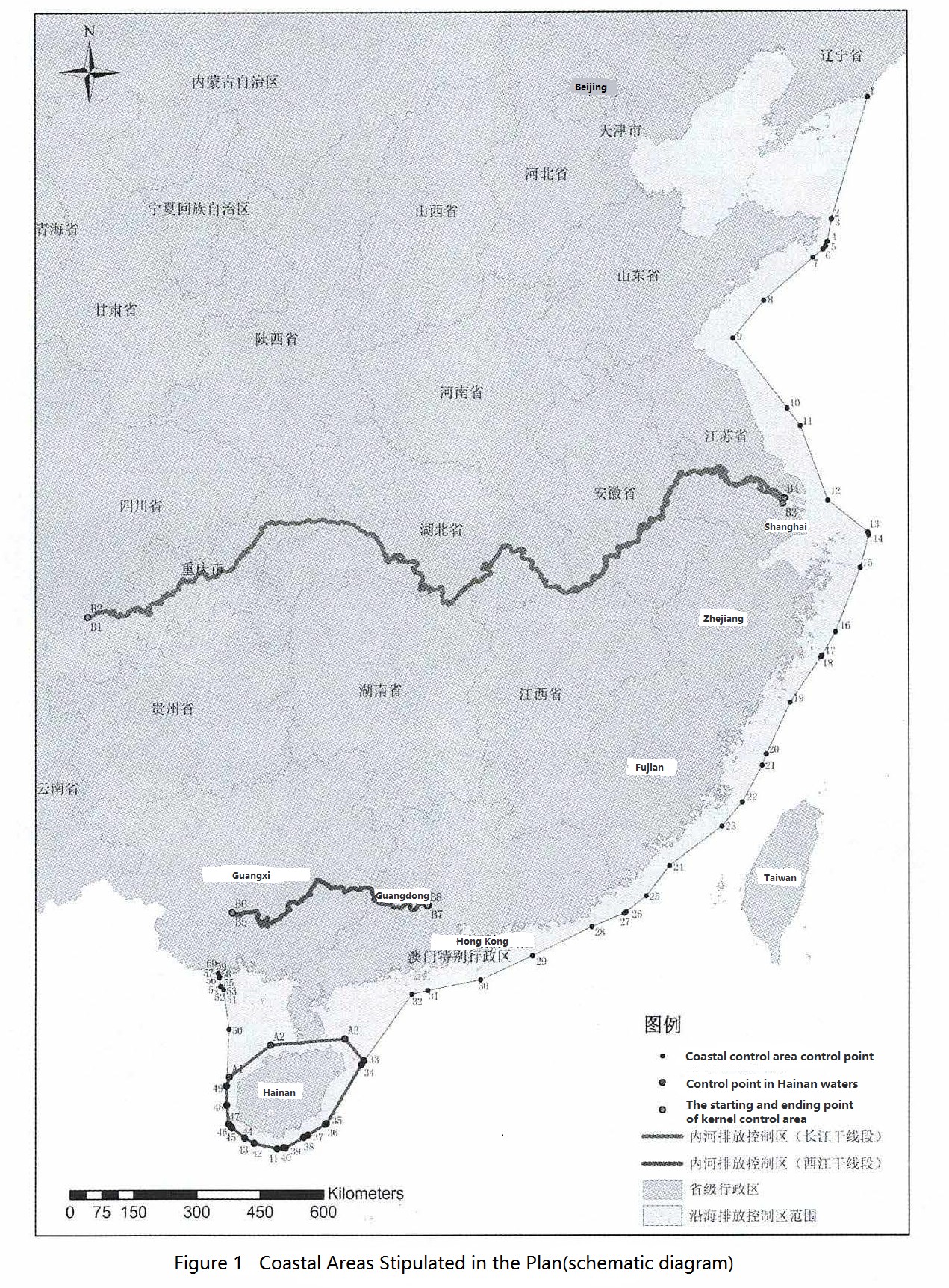
- China’s DECAs: All waters 12 Nautical Miles off the Chinese Coast will be defined as a National
Regulatory area. This means that after 1 January 2019 fuel used on all vessels operating in the Chinese National Regulatory Area will have to have a limit of 0.5% Sulphur content.
- Further Reductions: China has further pledged to reduce shipping air pollution in three coastal port clusters by up to 65% by 2020.
- Pearl River, Pearl River Delta: The core ports within this DECA are Shenzhen, Guangzhou and Zhuhai
- Yangtze River, Yangtze River Delta: The core ports within this DECA are Shanghai, Ningbo Zhoushan, Suzhou and Nantong.
- Bohai Rim (Beijing, Tianjin, Hebei): The core ports within this DECA are Tianjin, Qinhuangdao, Tangshan and Huanghua.
- Requirements:
- 1 January 2019: all ships that enter China's territorial waters must use low sulphur fuel (sulphur content of the fuel <= 0.5% m/m).
- 1 January 2020: all ships entering China inland emission control areas (Yangtze River and Xijiang River) must use ultra-low sulphur fuel (sulphur content <= 0.1% m/m).
- 1 March 2020: all ships without an Exhaust Gas Cleaning System (EGCS or scrubber) entering China's territorial waters are only permitted to carry and use the compliant fuel oil specified by the new regulation (sulphur content <= 0.5% m/m).
- 1 January 2022: all ships entering the Hainan emission control area must use ultra-low sulphur fuel (sulphur content <= 0.1% m/m).
Vessels can take alternative measures equivalent to the aforementioned control measures, such as; using clean energy, and treatment of exhaust gas.
Other useful Links:
- CCS: https://www.irclass.org/media/3469/china-eca-implementation-version-2-1-msa-50-17.pdf
- Gard: http://www.gard.no/web/updates/content/26160897/china-makes-further-changes-to-its-eca-timeline
- North of England:
http://www.nepia.com/insights/industry-news/china-emission-control-areas-starupdatestar
Table: Sulphur Oxide Emission Control Schedule ①②③
Ship type | Sulphur content of fuel oils≤(% m/m )④ | Coastal control areas | Inland control areas | ||
Hainan Waters | Other waters | ||||
Seagoing ships | 0.50 | From 2019.1.1 | |||
0.10 | From 2022.1.1 | From 2025.1.1 (To be evaluated) | From 2020.1.1 | ||
River-sea ships | Using fuel oils in accordance with the requirements of the newly revised national standard for marine fuel oils | From 2019.1.1 | |||
Inland ships | Large inland ships ⑤ | —— | —— | From 2019.1.1 | |
Other inland ships | General diesel oils in accordance with ⑥ GB 252 standard | —— | —— | From 2019.1.1 | |
Note:
- If the contents of this Table are inconsistent with the Chinese version and the official English version of the Plan issued by the Ministry of Transport, the official Chinese version of the Ministry of Transport shall prevail.
- Applicable to ships navigating, berthing or operating in the emission control areas, including ships engaged on international voyages, domestic coastal voyages and inland voyages.
- From January 1, 2019 (exclusive), inland ships and river-sea ships are to use fuel oil that meets relevant requirements; if the use of 0.50% low-sulphur fuel oil will pose a risk to the safety of the ship or there is no effective access to the low-sulphur fuel oil that meets the requirements, the ship may file waivers or exemptions with the maritime administration in advance. This is a regional regulation. If it is inconsistent with the Plan, the interpretation by the relevant maritime administration shall prevail.
- From March 1, 2020, ships may only bunker and use the fuel oils specified in this column (unless alternative measures are taken). Alternative measures include the use of shore power, clean fuels such as LNG, and exhaust gas post-treatment systems, but should be approved.
In addition, the new domestic emission control area regulation specifies certain shore power usage requirements for Chinese flagged ships.
Ships equipped with scrubbers are permitted to carry and use High Sulphur Fuel Oil (HSFO), subject to emissions monitoring, and scrubber waste and water must be disposed according to relevant regulation.
Please note that the sulphur limit values in this new regulation appear to differ from those included in regulation 14 of MARPOL Annex VI.
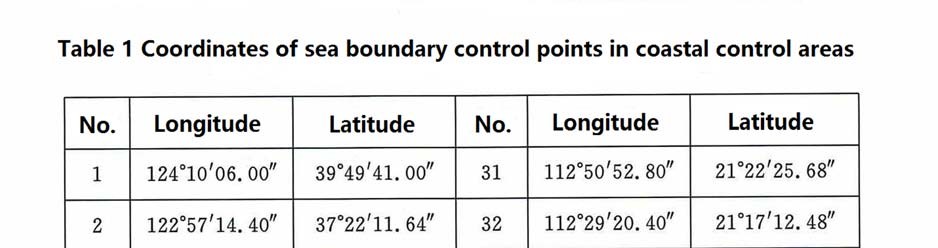
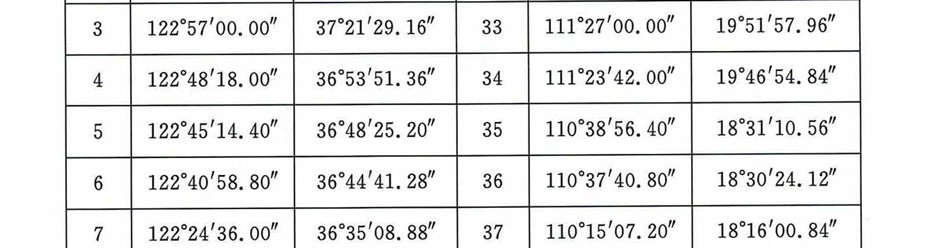
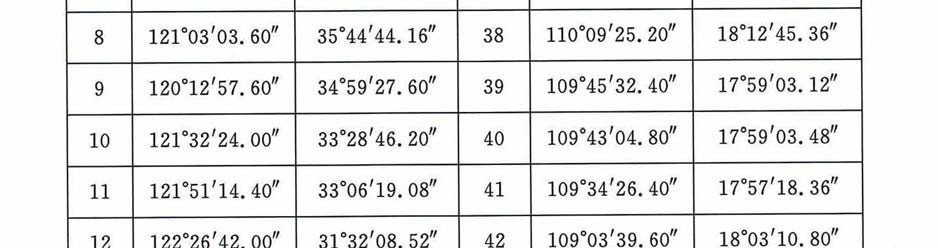
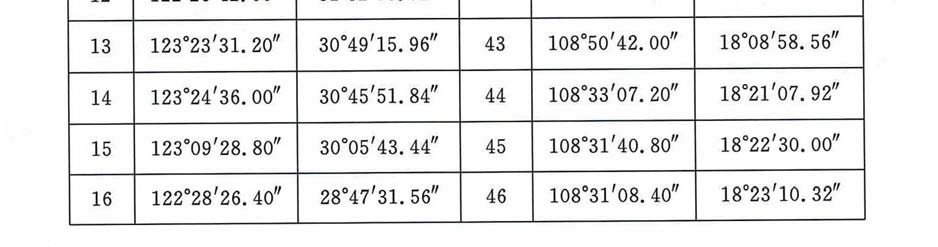
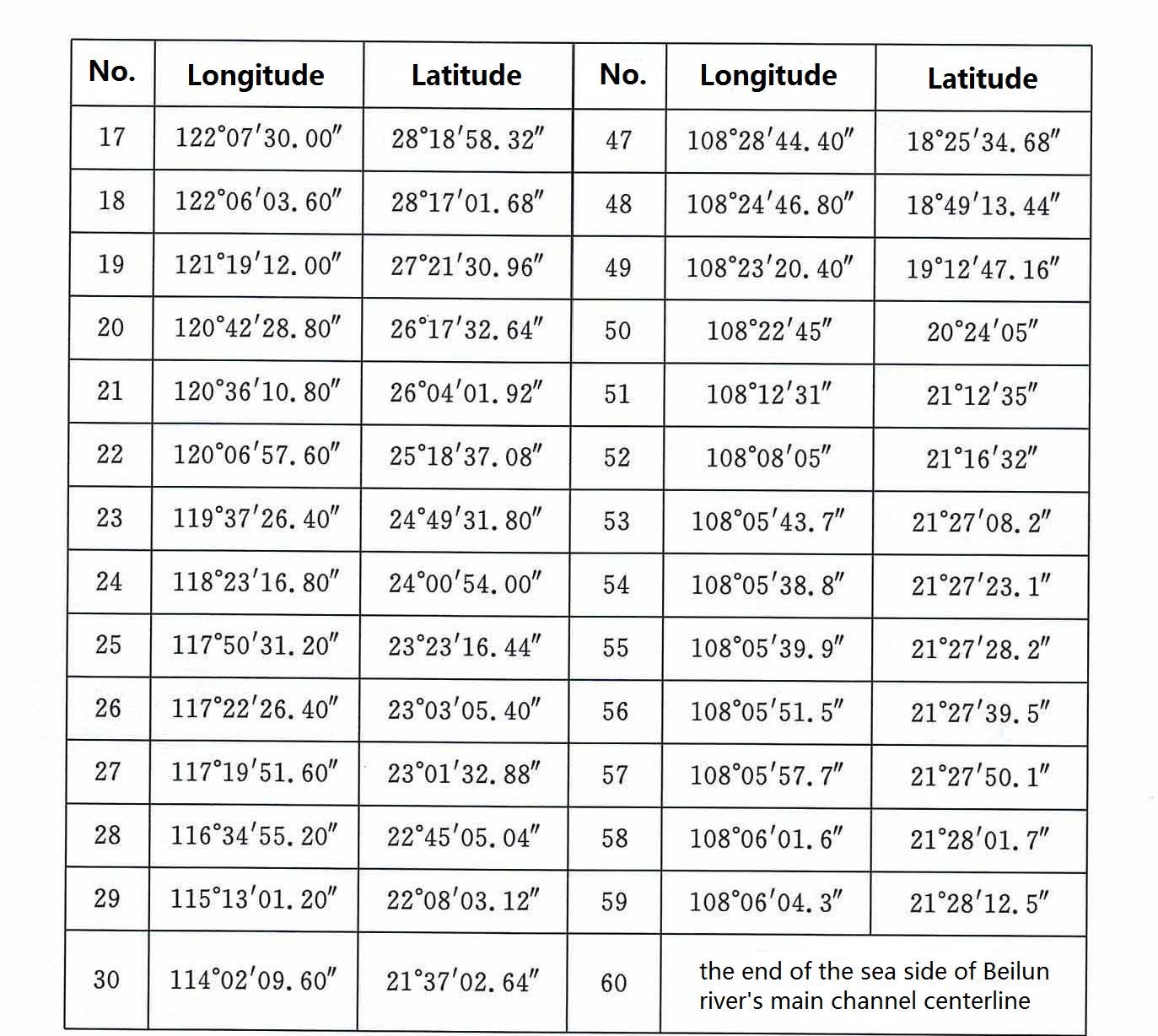
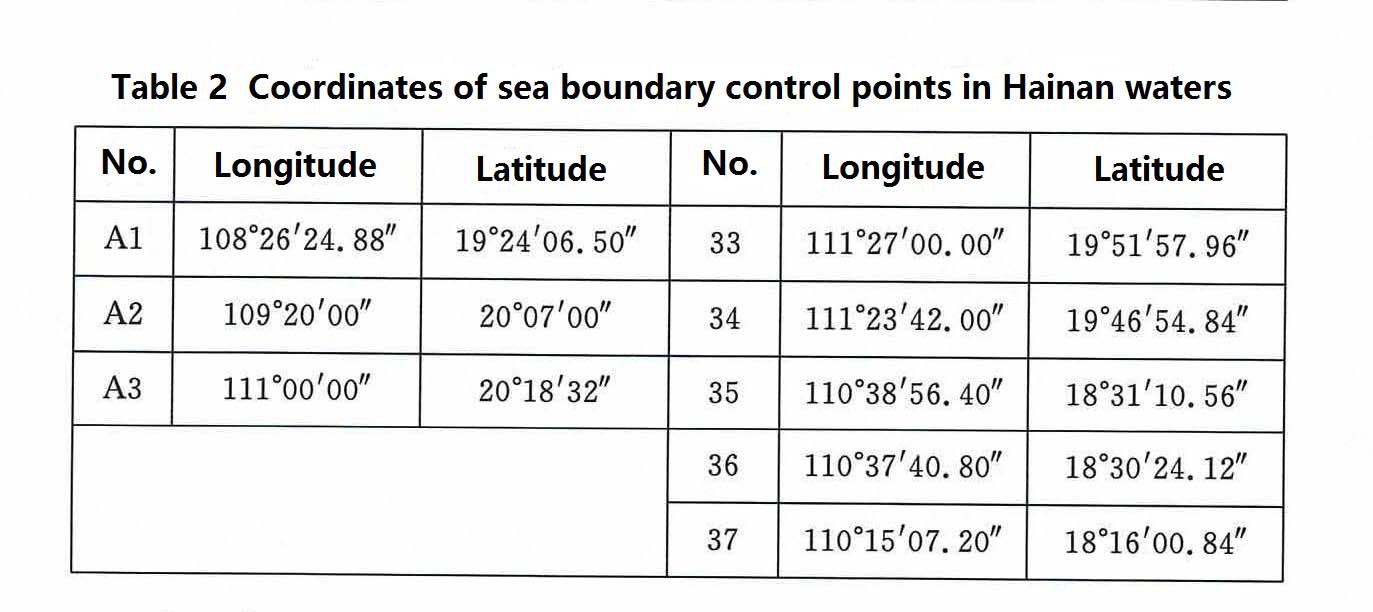
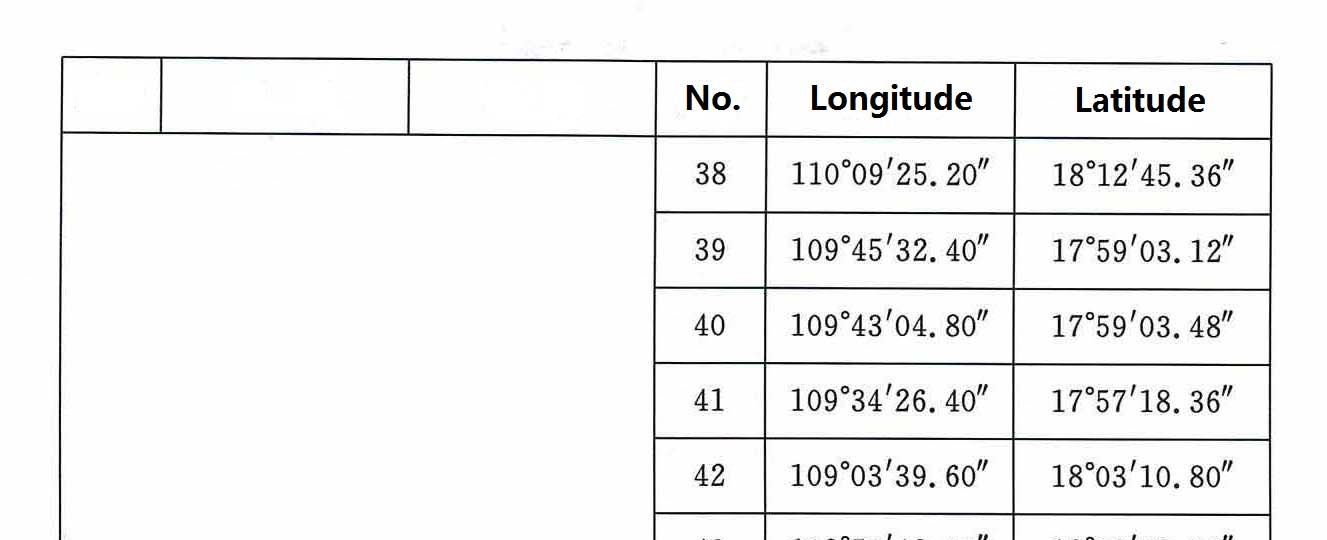
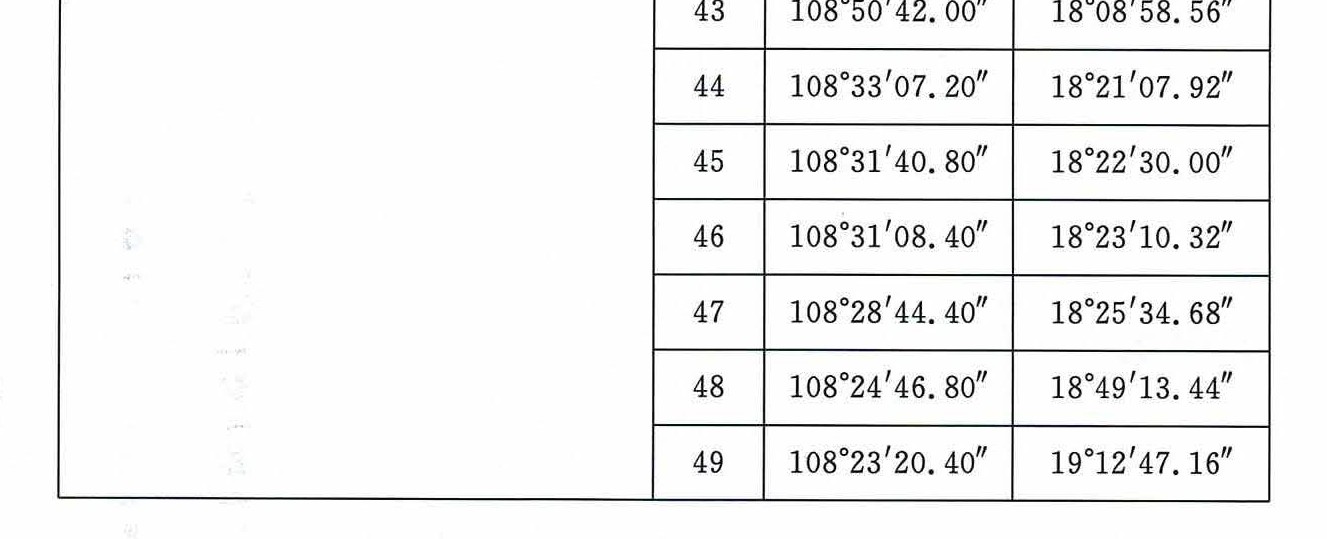
Table 3 Coordinates of starting and ending points in inland river control area
Inland River | Border | Place | No. | Longitude | Latitude |
Yangtze River main lines | starting | Shuifu, Yunnan Province | B1 | 104°24'30.60" | 28°38'22.38" |
B2 | 104°24'35.94" | 28°38'27.84" | |||
ending | Liuhe Estuary, Jiangsu Province | B3 | 121°18'54.00" | 31°30'52.00" | |
B4 | 121°22'30.00" | 31°37'34.00" | |||
Xijiang River main lines | starting | Nanning, Guangxi Province | B5 | 108°18'19.77" | 22°48'48.60" |
B6 | 108°18'26.72" | 22°48'39.76" | |||
ending | Zhaoqing, Guangdong Province | B7 | 112°48'30.00" | 23°08'45.00" | |
B8 | 123°47'19.00" | 23°08'01.00" |
* * * * *