
Marine Advisory: 22/2024 - Port of Dampier, Australia - Bridge Wing Shelters for the Protection of Pilots and Crew
02 August 2024
Marine Advisory 22/2024
02 August 2024
Marine Advisory: 22/2024
Subject: Port of Dampier, Australia - Bridge Wing Shelters for the Protection of Pilots and Crew
Dear Shipowner/Operator/Master:
The purpose of this Marine Advisory is to inform shipowners, operators, and masters of the Marine Notice issued by the Port of Dampier, Australia Harbor Master. The objective is to provide awareness of the new requirements for the vessels calling this port.
Overview
This Marine Notice details the Harbor Master’s requirements for vessel operators, owners and Masters regarding the availability of bridge wing shelters for the protection to the Pilots and the bridge team from the elements when working on the bridge wings in hot climatic conditions whilst still allowing unobstructed visibility from the bridge wings.
Requirements
From 1 September 2024, all bulk/cargo vessels of 81,000 DWT or more, and Gas Tankers of 60,000m3 capacity or more, must provide bridge wing shelters that meet the requirements of the Local Marine Notice for the protection of Pilots and the bridge team.
It is recommended that vessels of less than 81,000 DWT and Gas Tankers of less than 60,000 m3 also comply with the requirements of this notice.
The bridge wing shelter should be made of suitable material to provide shade from the sun and have the following minimum dimensions:
- Extend at least 1.52m inboard from the outer edge of the bridge wing.
- The fore-and-aft dimension is to at least extend from the forward part of the bridge wing to the aft part of the bridge wing.
- The height of the bridge wing shelter from deck level should be at least 2.45 m. On vessels that have a raised deck, grating or platform at the edge of the bridge wing, the bridge wing shelter should be raised accordingly.
The bridge wing shelters can be portable or removable if required and should be of strong construction to withstand winds that can be encountered. The design and rigging of the bridge wing shelter should prevent spilling water inside the frame of the shelter during rain. The design of the bridge wing shelter must allow unrestricted visibility from the bridge wing.
Bridge Wing Shelters, which comply with the requirements of Panama Canal Authority OP Notice to Shipping N1-2022, are acceptable for the purpose of this Local Marine Notice.
Harbor Masters office encourages innovative shelter designs that don’t require the need for crew to work aloft during assembly or disassembly. Vessel owners/operators shall risk assessing the assembling/disassembling works for these shelters to safeguard the crew from unidentified risks.
The Harbor Master office will not approve the design or risk assessment for bridge wing shelters.
Vessels unable to comply with the above requirement must notify the Harbor Master immediately. The Marine team will evaluate each vessel on a case-by-case basis.
If you have any questions, please contact our Fleet Performance Department at Telephone: +1-703-790-3434 or by email to prevention@liscr.com.
********
 Port of Dampier
– Bridge Wing Shelters for the Protection of Pilots and Crew
Number: D17/2024 Date: 12/07/2024
Date of Effect: 1/09/2024
Details: Port of Dampier- Bridge Wing Shelters for the Protection of Pilots and Crew
Former Notice: NA Charts & Publications: NA Further Notice: NA Attachments: NA

This Marine Notice details the Harbour Master’s requirements for vessel operators, owners and Masters regarding the availability of bridge wing shelters.
The objective of this Local Marine Notice is to provide protection to the Pilots and the bridge team from the elements when working on the bridge wings in hot climatic conditions whilst still allowing unobstructed visibility from the bridge wings.
The Port of Dampier experiences high temperatures during several months of the year, with mean maximum temperatures averaging around 36.4°C and a recorded high temperature of 49.0 °C.
From 1 September 2024, all bulk/cargo vessels of 81,000 DWT or more, and Gas Tankers of 60,000m3 capacity or more, must provide bridge wing shelters that meet the requirements of this Local Marine Notice for the protection of Pilots and the bridge team.
It is recommended that vessels of less than 81,000 DWT and Gas Tankers of less than 60,000 m3 also comply with the requirements of this notice.
The bridge wing shelter should be made of suitable material to provide shade from the sun and have the following minimum dimensions:
- Extend at least 1.52m inboard from the outer edge of the bridge wing.
- The fore-and-aft dimension is to at least extend from the forward part of the bridge wing to the aft part of the bridge wing. • The height of the bridge wing shelter from deck level should be at least 2.45 m. On vessels that have a raised deck, grating or platform at the edge of the bridge wing, the bridge wing shelter should be raised accordingly.
The bridge wing shelters can be portable or removable if required and should be of strong construction to withstand winds that can be encountered in Northwest WA. The design and rigging of the bridge wing shelter should prevent spilling water inside the frame of the shelter during rain. The design of the bridge wing shelter must allow unrestricted visibility from the bridge wing.
Bridge Wing Shelters, which comply with the requirements of Panama Canal Authority OP Notice to Shipping N-1-2022, are acceptable for the purpose of this Local Marine Notice.
The following are images and diagrams of bridge wing shelters that are acceptable. Alternate arrangements, including portable shelters, which provide equivalent or better protection and visibility, may be acceptable.
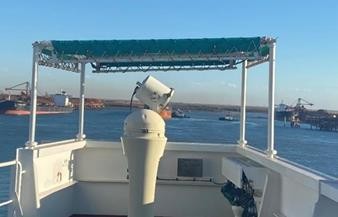
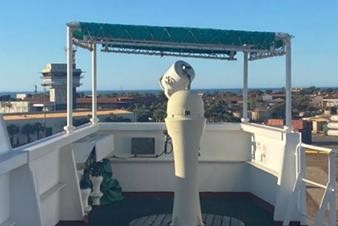
Example: Photos of Bridge Wing Shelter
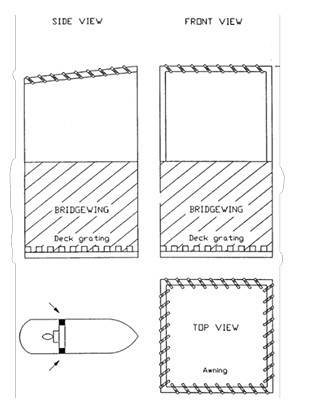
Example: Diagrams of Bridge Wing Shelter
Harbour Masters office encourages innovative shelter designs that don’t require the need for crew to work aloft during assembly or disassembly. Vessel owners/operators shall risk assess the assembling/disassembling works for these shelters to safeguard crew from unidentified risks.
Harbour Masters office will not approve design or risk assessment for bridge wing shelters.
Vessels unable to comply with the above requirement must notify the Harbour Master immediately. The Marine team will evaluate each vessel on a case-by-case basis.

Capt. Mike Minogue
Harbour Master


