
Marine Advisory: 35/2024 - Corrosion of lifeboat self-contained air support system cylinders
20 November 2024
Marine Advisory 35/2024
20 November 2024 Marine Advisory: 35/2024 |
Subject: Corrosion of lifeboat self-contained air support system cylinders Dear Shipowner/Operator/Master:
The objective of this Marine Advisory is to provide awareness and guidance on the United States Coast Guard (USCG) alert focused on Corrosion of lifeboat self-contained air support system cylinders and be prepared for PSC inspections in US ports.
Requirements
The Safety Alert issued by the USCG is intended to raise awareness of potential hazards with insufficiently inspected compressed air cylinders used in lifeboat self-contained air support systems for fire-protected lifeboats.
Background
During a routine inspection, it was discovered a large hole in one of the lifeboats. Further examination revealed that a cylinder from the self-contained air support system had ruptured, causing the damage. The rupture sent fragments into the overhead flotation chamber of the lifeboat, and one of the three cylinders was lost to the sea, with its condition unknown. The third cylinder remained in its stowage location but showed signs of severe corrosion.
Many lifeboats with these systems store air cylinders horizontally in or just above the bilge area beneath the centerline seats. Although lifeboat canopies are required to be watertight, water ingress/accumulation in the bilges and cylinder storage compartments can be a common occurrence. The lifeboat involved in this incident was designed with a separate compartment to isolate the cylinders from the bilge, but this compartment was also not watertight and had collected several inches of water. Accessing the compressed air cylinders in this lifeboat required the removal of the center divider and seats.
An inspection of the intact cylinder and the ruptured cylinder fragment showed significant corrosion. While the exact cause of the corrosion is unknown, it is suspected that the cylinders were partially submerged in water and subjected to accelerated corrosion due to the presence of dissimilar metals. Although stray electrical currents were considered as a potential cause, they were deemed unlikely given the lifeboat's electrical configuration.
This incident could have been fatal or caused severe injuries if personnel had been nearby. Despite the cylinders having undergone an annual inspection 14 months prior and being within their hydrostatic testing period, the corrosion went undetected. The cylinders were only five years old, but their condition suggested significant deterioration.
Recommendations
The US Coast Guard recommends that owners, manufacturers, operators, and service providers:
- Verify the physical condition of the entire cylinders during annual lifeboat inspections.
- Consider inspection methods that provide for visual inspection of all air cylinders in their entirety (e.g.
fully accessing the storage compartment or using inspection cameras to view all cylinder surfaces while in their stowage location).
- Ensure air cylinder stowage compartments are maintained in a dry condition.
- Ensure that the air cylinders are inspected and maintained in accordance with 46 CFR 147.60, applicable to USCG approved lifeboats through 46 CFR 160.135-7(b)(25).
- These cites invoke 49 CFR 180 that addresses corrosion and abraded areas, among other signs of defect or damage.
- Implement training for all personnel responsible for lifeboat maintenance or operation to provide awareness of the necessity for proper maintenance and inspection of lifeboat compressed air cylinders for all types of cylinder construction.
- Consider approved design changes that provide for routine access to all portions of the cylinders for proper inspection and maintenance.
- The Coast Guard also recommends that appropriate safety measures are implemented for any lifeboats that are not in active service (e.g. spare boats or boats removed from service for maintenance) or are part of an inspected vessel or unit that is no longer in active service. Safety measures could include, but are not limited to, bleeding pressure from the cylinders, removal of the cylinders from the lifeboat, or continuing regular inspection of the cylinders.
If you have any questions, please contact our Fleet Performance Department by Telephone:
+1-703-790-3434 or by email to prevention@liscr.com.

Inspections and Compliance Directorate
October 28, 2024 Safety Alert 08-24
Washington, DC
CORROSION OF LIFEBOAT SELF-CONTAINED AIR SUPPORT SYSTEM CYLINDERS CAN BE DANGEROUS
This Safety Alert is intended to raise awareness of potential hazards with insufficiently inspected compressed air cylinders used in lifeboat self-contained air support systems for fireprotected lifeboats.

Figure
1
:
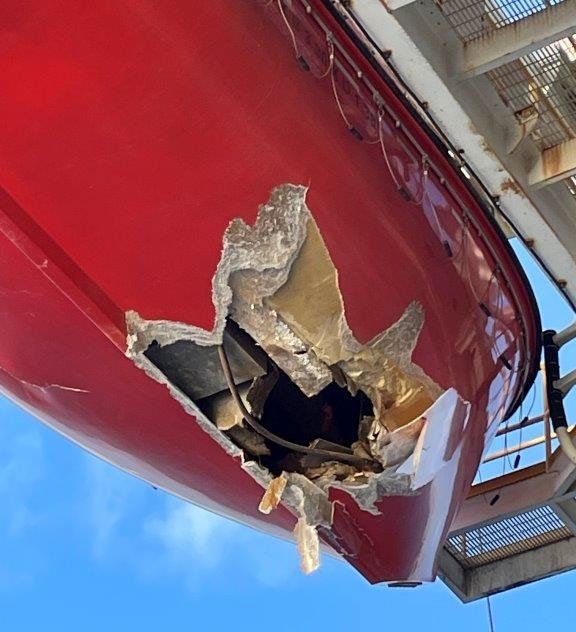
Lifeboat damage sustained
from
ruptured compressed air cylinder.
During a routine inspection of an OCS unit that was unmanned and awaiting decommissioning, company personnel discovered a large hole in one of the facility’s lifeboats (Figure 1). Further examination revealed that a cylinder from the self-contained air support system had ruptured, causing the damage. The rupture sent fragments into the overhead flotation chamber of the lifeboat (Figure 2), and one of the three cylinders was lost to the sea, with its condition unknown. The third cylinder remained in its stowage location but showed signs of severe corrosion.
Many lifeboats with these systems store air cylinders horizontally in or just above the bilge area beneath the centerline seats. Although lifeboat canopies are required to be watertight, water ingress/accummulation in the bilges and cylinder storage compartments can be a common occurrence[1]. The lifeboat involved in this incident was designed with a separate compartment to isolate the cylinders from the bilge, but this compartment was also not watertight and had collected several inches of water. Accessing the compressed air cylinders in this lifeboat required the removal of the center divider and seats.

Figure
2
:
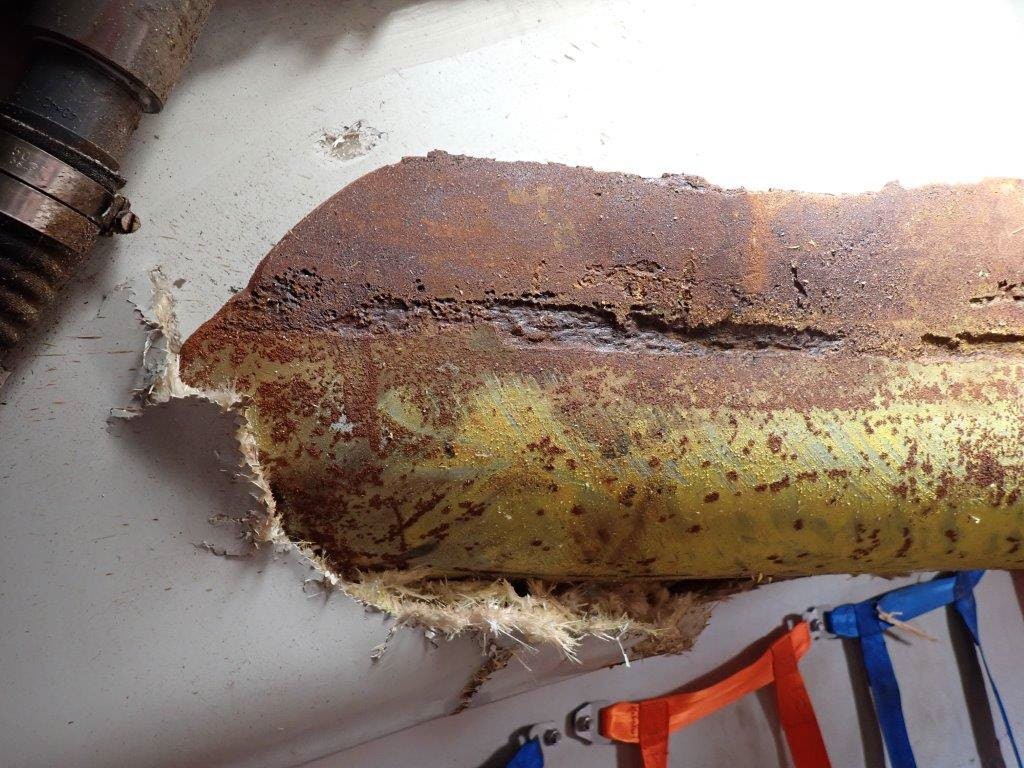
Severely corroded remnants of compressed air
cylinder shell. Note the distinct line of deep pitting.
An inspection of the intact cylinder and the ruptured cylinder fragment showed significant corrosion (Figure 2). While the exact cause of the corrosion is unknown, it is suspected that the cylinders were partially submerged in water and subjected to accelerated corrosion due to the
October 28, 2024 Safety Alert 08-24
Washington, DC
presence of dissimilar metals. Although stray electrical currents were considered as a potential cause, they were deemed unlikely given the lifeboat's electrical configuration and the OCS unit’s secured power.
This incident could have been fatal or caused severe injuries if personnel had been nearby. Despite the cylinders having undergone an annual inspection 14 months prior and being within their hydrostatic testing period, the corrosion went undetected. The cylinders were only five years old, but their condition suggested significant deterioration.
The Coast Guard recommends that owners, manufacturers, operators, and service providers:
- Verify the physical condition of the entire cylinders during annual lifeboat inspections.
- Consider inspection methods that provide for visual inspection of all air cylinders in their entirety (e.g. fully accessing the storage compartment or using inspection cameras to view all cylinder surfaces while in their stowage location).
- Ensure air cylinder stowage compartments are maintained in a dry condition.
- Ensure that the air cylinders are inspected and maintained in accordance with 46 CFR 147.60, applicable to USCG approved lifeboats through 46 CFR 160.135-7(b)(25).
- These cites invoke 49 CFR 180 that addresses corrosion and abraded areas, among other signs of defect or damage.
- Implement training for all personnel responsible for lifeboat maintenance or operation to provide awareness of the necessity for proper maintenance and inspection of lifeboat compressed air cylinders for all types of cylinder construction.
- Consider approved design changes that provide for routine access to all portions of the cylinders for proper inspection and maintenance.
- The Coast Guard also recommends that appropriate safety measures are implemented for any lifeboats that are not in active service (e.g. spare boats or boats removed from service for maintenance) or are part of an inspected vessel or unit that is no longer in active service. Safety measures could include, but are not limited to, bleeding pressure from the cylinders, removal of the cylinders from the lifeboat, or continuing regular inspection of the cylinders.
This safety alert was prepared by the Outer Continental Shelf National Center of Expertise, is provided for informational purposes only and does not relieve any domestic or international safety, operational, or material requirements. Address questions to HQS-SBM-CGINV@uscg.mil or OCSNCOE@uscg.mil.
2
This condition was likely exaggerated in this case due to the facility being in an unmanned state for an extended timeframe with the out-ofservice lifeboats not receiving the routine readiness inspections and maintenance that is normally applied to in-service lifeboats.
1 ↑