
Marine Advisory: 14/2026 - Prevention of Finger and Hand Injuries – Safe Handling Practices, Pinch Point Awareness, and Compliance with Safety Management System Requirements
26 May 2026
Marine Advisory 14/2026
26 May 2026
Marine Advisory: 14/2026
Subject: PREVENTION OF FINGER AND HAND INJURIES – SAFE HANDLING
PRACTICES, PINCH POINT AWARENESS, AND COMPLIANCE WITH
SAFETY MANAGEMENT SYSTEM REQUIREMENTS
Ref:
- SOLAS Chapter IX
- ISM Code – Sections 1.2.2, 6, 7, and 10
- Liberian Marine Notice INS-001 – Safety Inspections of Liberian Ships
- Liberian Marine Notice MLC-005/3.3
Dear Shipowners/Operators/Masters/Engine Department Personnel:
The purpose of this Marine Advisory is to reinforce mandatory safety requirements and operational controls related to finger and hand injury prevention aboard Liberian-flagged vessels, with particular emphasis on pinch point hazards, safe handling of heavy equipment, and mooring operations.
Recent marine incidents demonstrate that routine shipboard activities present significant crush and amputation risks when personnel work near moving machinery, handle heavy components, or conduct mooring operations without adequate hazard awareness, task-specific risk assessment, supervision, or appropriate safeguards.
This Advisory summarizes:
- Required Regulatory and Safety Management System (SMS) obligations
- Common deficiencies identified during casualty investigations
- Lessons learned from electrocution incidents
- Mandatory actions to prevent recurrence
This Advisory does not address investigation procedures, evidence collection, or reporting steps beyond basic regulatory obligations.
Finger/Hand Injury Casualty Overview
The Administration has reviewed multiple finger and hand injury incidents that occurred:
- Both at sea and in port
- During routine operations such as machinery maintenance, mooring operations, cargo handling, and deck work
- Involving pinch points between moving equipment, doors, hatches, ropes, and heavy components
Incident Statistics (2025–2026):
Year | Finger/Hand Injury Incidents |
2025 | 30 |
2026 (YTD) | 12 |
Total | 42 |
Primary Causation Factors:
Injury Mechanism | Incidents |
Caught in or between objects | 23 (55%) |
Struck by falling/moving objects | 15 (36%) |
Other (slips, cuts) | 4 (9%) |
In the reviewed cases, injuries frequently involved fingers being caught between heavy machinery components, crushed by doors or hatches, trapped in mooring lines, or struck by tools during maintenance activities. Several incidents resulted in traumatic amputations.
Marine Casualty Summaries:
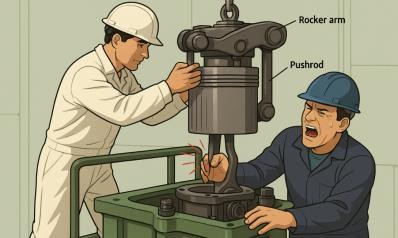
Case 1 – Engine Room Maintenance (Caught Between Objects) A Wiper was assisting the 3rd Engineer with lowering an auxiliary engine cylinder. The Wiper did not recognize that the tip of his left hand index finger remained positioned between the rocker arm and the pushrod. When the component was lowered, the finger was crushed between the moving parts. |
|
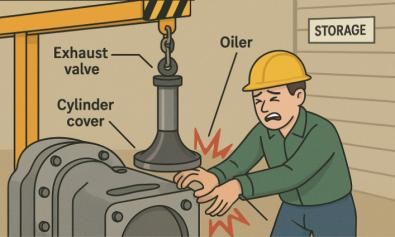
Case 2 – Heavy Component Handling (Pinch Point) An Oiler was directing an exhaust valve being moved by engine crane to storage after maintenance. He failed to remove his hand in time when the distance between the cylinder cover and exhaust valve became minimal. His finger was pressed between the cover and the exhaust valve, resulting in a crushing injury. |
|
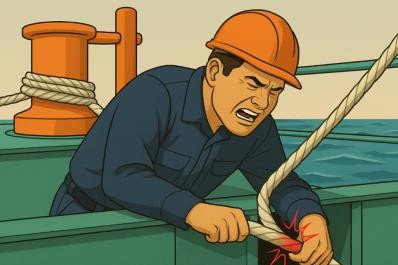
Case 3 – Mooring Operations (Line Handling) An Able Seaman sustained an index finger injury when his finger was squeezed between a mooring rope and the edge of the hatch while transferring the mooring rope under deck at the forecastle. The finger was trapped as the line came under tension. |
|
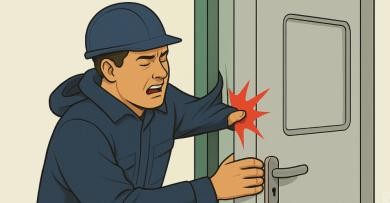
Case 4 – Fingertip Amputation (Door Closure) A crew member's jacket became caught on a door structure. While attempting to free himself, the tip of his middle finger was crushed during the door's closing, resulting in amputation of the fingertip. |
|
Case 5 – Drilling Operations (Pinch Point Amputation) A Floorman sustained a traumatic amputation of the distal left thumb when his finger was caught in a pinch point while removing a retaining pin from a hands-free gooseneck in the moonpool. |
|
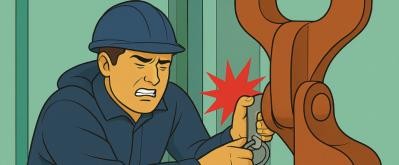
Key Safety Failures Identified
Investigations identified the following recurring deficiencies:
- Hands positioned in pinch points during lifting, lowering, or equipment movement
- Lack of awareness of crush zones near moving machinery, doors, hatches, and mooring equipment
- Inadequate communication between team members during coordinated lifting/lowering tasks
- Failure to use tag lines or remote handling tools when moving heavy components
- Rushing to complete tasks without proper hazard assessment
- Absence of "hands-free" verification before equipment movement
- Inadequate supervision of inexperienced personnel during high-risk operations
- Lack of appropriate hand protection (cut-resistant or impact gloves) for the task
- Insufficient toolbox talks addressing pinch point and crush hazards
Flag Administration Requirements and Best Practices
The Administration has reviewed recent finger and hand injury casualties and notes that noncompliance with established Safety Management System (SMS) requirements, including inadequate assessment and control of pinch point hazards, remains a significant contributory factor.
In accordance with SOLAS, the ISM Code, and applicable Liberian Marine Notices, Shipowners, Operators, and Masters are reminded that hazard identification and risk assessment are mandatory requirements for all shipboard operations.
Review and Implement Risk-Based Procedures
- Ensure the SMS adequately addresses pinch point and crush hazards associated with:
- Heavy component handling and machinery maintenance
- Mooring, anchoring, and line handling operations
- Door, hatch, and watertight closure operations
- Lifeboat and survival craft operations
- Require task-specific risk assessments for operations involving:
- Lifting, lowering, or moving heavy equipment
- Working near rotating, sliding, or closing mechanisms
- Line handling under tension
- Risk assessments shall clearly identify:
- All pinch points and crush zones
- "Hands-clear" verification requirements
- Communication protocols between team members
- PPE requirements (impact gloves, cut-resistant gloves)
- Supervision requirements for inexperienced crew
The Administration emphasizes that classifying equipment handling as a "routine task" does not remove the obligation to formally assess and control associated risks.
Pinch Point Identification and Control
- Conduct pinch point surveys of all work areas, particularly:
- Engine room machinery and lifting equipment
- Mooring stations and line-handling areas
- Watertight doors, hatches, and access points
- Lifeboat davits and survival craft equipment
- Mark identified pinch points with appropriate warning signage
- Install guards where practicable to prevent hand access to crush zones
Safe Work Practices
- Establish mandatory "hands-clear" verbal confirmation before:
- Lowering or moving heavy components
- Closing doors, hatches, or covers
- Tensioning mooring lines
- Require use of tag lines, push/pull sticks, or remote handling tools when positioning heavy equipment
- Prohibit hands inside potential crush zones during equipment movement
- Ensure doors with self-closing mechanisms are fitted with adequate warning devices
Supervision, Training, and Oversight
- Prohibit inexperienced personnel from handling heavy equipment without direct supervision
- Reinforce crew training on:
- Pinch point recognition and avoidance
- Safe lifting and component handling techniques
- Three-point contact and hand placement awareness
- Proper use of impact-resistant and cut-resistant gloves
- Include pinch point hazard management in onboard audits, drills, inspections, and toolbox meetings
Required Actions to Prevent Recurrence
- Conduct Pinch Point Surveys – Identify and mark all crush zones in machinery spaces, on deck, and at mooring stations.
- Implement "Hands-Clear" Protocols – Require verbal confirmation before any equipment movement, door closure, or line tensioning.
- Use Remote Handling Tools – Mandate use of tag lines, push sticks, or guide tools when positioning heavy components.
- Provide Appropriate PPE – Issue impact-resistant and cut-resistant gloves for tasks involving heavy equipment and line handling.
- Enhance Toolbox Talks – Include specific discussion of pinch points and hand placement before maintenance and mooring operations.
- Supervise High-Risk Tasks – Ensure experienced personnel directly supervise inexperienced crew during lifting, lowering, and mooring activities.
- Maintain Incident Records – Document all finger/hand injuries, near-misses, and corrective actions taken.
The Administration reminds all operators that prevention of finger and hand injuries is a fundamental safety obligation. Strict compliance with pinch-point identification, risk assessment, safe handling practices, supervision, and training requirements is essential to prevent the recurrence of these preventable incidents.
For more information, please contact the Investigations Department at investigations@liscr.com.
* * * * *


