FTP-001 - Requirements for Engaging in Transshipment Activities on the high seas, in ports, between ports and in regulated areas.
26 August 2024
Marine Notice 08/2024
 NATIONAL FISHERIES AND AQUACULTURAL AUTHORITY (NaFAA)
P.O. Box 1384, Bushrod Island, Monrovia, Liberia
Marine Notice FTP-001 Rev. 08/2024
To: | Vessel Owners, Operators, and Masters of Liberian Flagged Reefer, Refrigerated Cargo, and Support Vessels |
Subject: | Requirements for Engaging in Transshipment Activities on the high seas, in ports, between ports and in regulated areas. |
Reference: | a. IATTC, ICCAT, IOTC, SPRFMO, WCPFC Conservation Measures; |
b. National Fisheries and Aquaculture Management and Development Law; | |
c. Liberia Fisheries Regulations (2010); | |
d. Liberia Maritime Law, Sections 11, 12, 13 and 51; and | |
e. Liberia Maritime Regulation 1.13(2) |
The following change has been included in Annex I:
a. Prohibiting vessels from retaining on board, transshipping, or landing any part or whole carcass of a mobulid ray, and require prompt release alive and unharmed any mobulid ray that is caught, in accordance with safe handling practices…Vessels are to surrender any unintentionally landed mobulid rays to the relevant government authorities at the point of landing or transshipment, or discard them where possible, and should allow observers to collect biological samples of mobulid rays that are caught and dead.
Supersedes: Marine Notice FTP-001, dated 10/2020
PURPOSE:
This Marine Notice (“Notice”) provides requirements for Owners, Operators and Masters of Liberian flagged vessels involved in or that plan to engage transshipment activities on the high seas, in ports, between ports and regulated areas.
BACKGROUND
Global value of economic losses from Illegal, Unreported and Unregulated (“IUU”) fishing range in billions of dollars annually. IUU fishing refers to fishing activities conducted in violation of national laws, international agreements and internationally or regionally agreed Conservation and Management Measures (CMMs). IUU fishing include fishing or transshipping without a license, authorization, failing to report catches or making false reports, keeping undersized fish or fish that are otherwise protected by regulations, fishing in closed areas or during closed seasons, and using prohibited fishing gear. Fishing vessels includes vessels that engage in transshipment and fishing vessel support activities on the high seas, in ports, between ports and in regulated areas.
To help curb IUU fishing, Regional Fisheries Management Organizations (“RFMOs”) have established measures to enhance monitoring, control and surveillance and to penalize non-compliance. Liberia is a Cooperating Member to certain RFMOs; therefore, Owners, Operators and Masters of vessels registered in Liberia must ensure compliance with applicable regulations to prevent IUU fishing, which includes unauthorized transshipment activities.
APPLICABILITY:
This Notice applies to all Liberian flagged reefer, refrigerated cargo and support vessels that engage in or plan to engage in transshipment activities on the high seas, in ports, between ports and regulated areas. Owners, Operators and Masters shall:
- Ensure that all their reefer, refrigerated, transport and support vessels involved in transshipment have been issued a transshipment license and prior authorization from Liberia’s Competent Authority, and report all required information about their operations;
- Implement and enforce management measures through effective monitoring, control and surveillance; and
- Transship and land fishery in accordance with this Notice and all other applicable rules and regulations.
DEFINITIONS
A. Transshipment
Transshipment means the transfer, over the side, of any quantity of fisheries resources or products thereof retained on board, from one fishing vessel to another vessel either at sea or in port. This includes transporting fish products, participating in joint operations such as re-supply or re-fueling of vessels engaged in fishing activities. For transshipments that occur within EEZs and in port, the vessels involved must follow coastal State reporting requirements.
** Please note that the WCPFC has limited Liberia’s participatory rights to only carrier vessels to engage in transshipment activities in the WCPFC Convention Area. Therefore, Liberian flagged vessels are prohibited from supplying or supporting fishing vessels in the WCPFC Convention area.
B. Illegal, Unreported and Unregulated (IUU) Fishing
IUU fishing describes fishing activity which contravenes national or international agreements and management measures. Vessels are presumed to have carried out IUU fishing activities when they:
- Engage in unlicensed/unauthorized fishing for fishery resources;
- Are not registered on the list of vessels authorized to fish, transship, or supply fishing vessels in a Convention Area;
- Do not record and/or report their catches made in the Convention Area, or make false reports;
- Take on board, transship or land undersized fish in a way that undermines CMMs;
- Use prohibited or non-compliant fishing gear in a way that undermines CMMs;
- Transship with, or participate in joint operations such as re-supply or re-fueling vessels included on the IUU List and or Record of Vessels.
C. IUU Vessels List
Vessels that are confirmed to have conducted one or more of the above activities will be included on an ‘IUU Vessels’ List’. The Competent Authority has the responsibility to notify the owner when their vessel has been determined to have engaged in IUU activities, of the vessels inclusion on the list and of the potential actions that may be taken. Some potential actions include:
- Delisting the vessel from the Registry;
- Withdrawal or suspension of licenses;
- Monetary penalty and/or civil liability;
- Prohibition of port access; 5. Confiscation of catch; and
6. Refusal to grant a flag State Certificate of Registration.
D. Competent Authority
Competent Authority means the National Fisheries and Aquaculture Authority (NaFAA) of the Republic of Liberia, and is the competent authority for all fisheries and fisheries related activities including the issuance of transshipment licenses and authorizations.
REGULATIONS:
NaFAA has established regulations, which require owners and operators take necessary measures to ensure that their vessels comply with certain requirements prior to engagement in transshipment activities. Below are some relevant requirements:
A. Transshipment License
An Owner/Operator must have a Transshipment License before their vessel engages in transshipment activities. Owners/Operators are required to submit an application for Transshipment License to NaFAA. NaFAA will conduct IUU background checks to ensure that the Owner, Operator and vessel has no history of IUU activities. Prior to issuing the license, NaFAA will add the vessel to the Record of Vessels in the RFMO regions selected on the application. Application for a transshipment license and inquiries shall be sent to both transshipment@nafaa.gov.lr and transshipment@liscr.com.
B. Transshipment Authorization
Owners/Operators requesting authorization for a vessel to engage in transshipment activities are required to submit an application request to NaFAA at least 72 hours in advance of proposed transshipment operation/s. NaFAA will conduct background checks prior to issuing such authorizations. Requests should be sent to transshipment@nafaa.gov.lr and transshipment@liscr.com.
** No transshipment activity should commence until authorization is issued by NaFAA.
C. Establishing a Record of Vessels Authorized to Transship
Transshipments at sea, in port, between ports and in regulated areas must only be undertaken between vessels included in the RFMOs’ Record of Vessels. An Owner, Operator intending to obtain a transshipment license for their vessel must inform the Administration at least 15 days prior to the first entry of such vessel in a Regulated Area or other area, in order to be placed on the Record of Vessels.
D. Vessel Monitoring System (VMS)
Owners, Operators and Masters of vessels authorized for transshipment should ensure installation and operation of a VMS. The VMS must be activated and operating at all times and automatically communicate: (i) static unique identifier; (ii) current geographical position (latitude and longitude) of the vessel; (iii) date/ time (expressed in UTC) of the position of the vessel; (iv) where applicable, data relating to the catch onboard; and (v) data relating to transshipment.
In case of an emergency and if the vessel is unable to transmit transshipment data via the VMS, the Master should email transshipment@nafaa.gov.lr and transshipment@liscr.com. In the event of a technical failure of the VMS, the device must be repaired or replaced within one (1) month. A dispensation must be obtained from NaFAA during this period. The Master of the vessel is prohibited from commencing a transshipment operation with a defective VMS. Where a device stops functioning and a trip lasts more than one month, the repair or the replacement must take place as soon as the vessel enters a port. Notwithstanding, a vessel with a defective VMS tracking device should manually communicate, at least every 4 hours, reports to the Fisheries Monitoring Center (FMC); the report must include: the name of the vessel, call sign, trip number, vessel registration number, latitude and longitude, speed, course, activity, date and time.
E. Establishing a List of Vessels Presumed to have carried out IUU Fishing Activities
NaFAA is required to transmit every year to the RFMOs a list of vessels presumed to have carried out IUU fishing activities during the current and previous year, accompanied by evidence supporting the presumption of IUU activity. Following the requirements of this Marine Notice will assist your vessel comply with the requirements. If in doubt, please email transshipment@nafaa.gov.lr and transshipment@liscr.com.
F. Regional Observer Program
Owners, Operators and Masters shall ensure their vessels carry the required observers to monitor transshipments at sea and in certain ports. See respective Annexes for more information.
G. Reporting
Owners, Operators and Masters shall ensure their vessels report on all transshipment activities to the applicable RFMO and Competent Authority no later than seven (7) days after the transshipment is carried out.
H. High Seas Boarding/Inspection
High seas control and surveillance are intended to be carried out by inspectors assigned by certain RFMOs. Owners, Operators and Masters shall ensure their ships comply with each RFMO’s high seas inspection and boarding requirements.
COMPETENT AUTHORITY’S OBLIGATIONS:
NaFAA is required to take all necessary measures to ensure that Liberian flagged vessels engaged in transshipment activities:
- Comply with applicable rules and regulations, and that such vessels do not engage in any activity which undermines the effectiveness of such rules, etc.;
- Do not conduct unauthorized transshipment activities on the high seas, in ports, between ports and regulated areas;
- Ensure that VMS units are installed onboard vessels;
- Take all necessary measures to support efforts to prevent, deter and eliminate IUU fishing;
- Investigate reports of vessels’ non-compliance and ensure that penalties applicable for such noncompliance are of an appropriate severity, taking into account relevant factors including the value
of the catch, to secure compliance, discourage further violations and deprive offenders of the benefits accruing from their illegal activities.
OWNER/OPERATOR/MASTER OBLIGATIONS:
Owners, Operators and Masters are responsible for ensuring their vessels and crew are in compliance with Liberia’s National Fisheries and Aquaculture Management and Development Law, Fisheries Regulations, CMMs of RFMOs in whose jurisdiction they enter and other applicable national, international regulations.
They shall:
- Ensure that they obtain transshipment license and authorization from NaFAA before engaging in transshipment activities;
- Ensure that the authorization issued by NaFAA and, if applicable, any license is carried on board the vessel at all times and produced at the request of an authorized enforcement official of any member of the Commission and RFMO;
- Ensure that data on landings and transshipment operations are provided to NaFAA and RFMOs;
- Ensure that the VMS on the vessels remain operational;
- Comply with any procedures established by the RFMOs to verify the quantity and species transshipped, and any additional procedures and measures established thereby; and
- Comply with the RFMOs’ specific requirements outlined in the applicable Annexes with respect to reporting, inspections, boarding, etc.
List of Annexes:
Annex 1 - Western Central Pacific Fisheries Commission (WCPFC)
Annex 2 - Southern Pacific Regional Fisheries Management Organization (SPRFMO)
Annex 3 - Indian Ocean Tuna Commission (IOTC)
Annex 4 - International Commission for the Conservation of Atlantic Tunas (ICCAT) Annex 5 - Inter-American Tropical Tuna Commission (IATTC)
ANNEX 1
WESTERN CENTRAL PACIFIC FISHERIES COMMISSION (WCPFC)
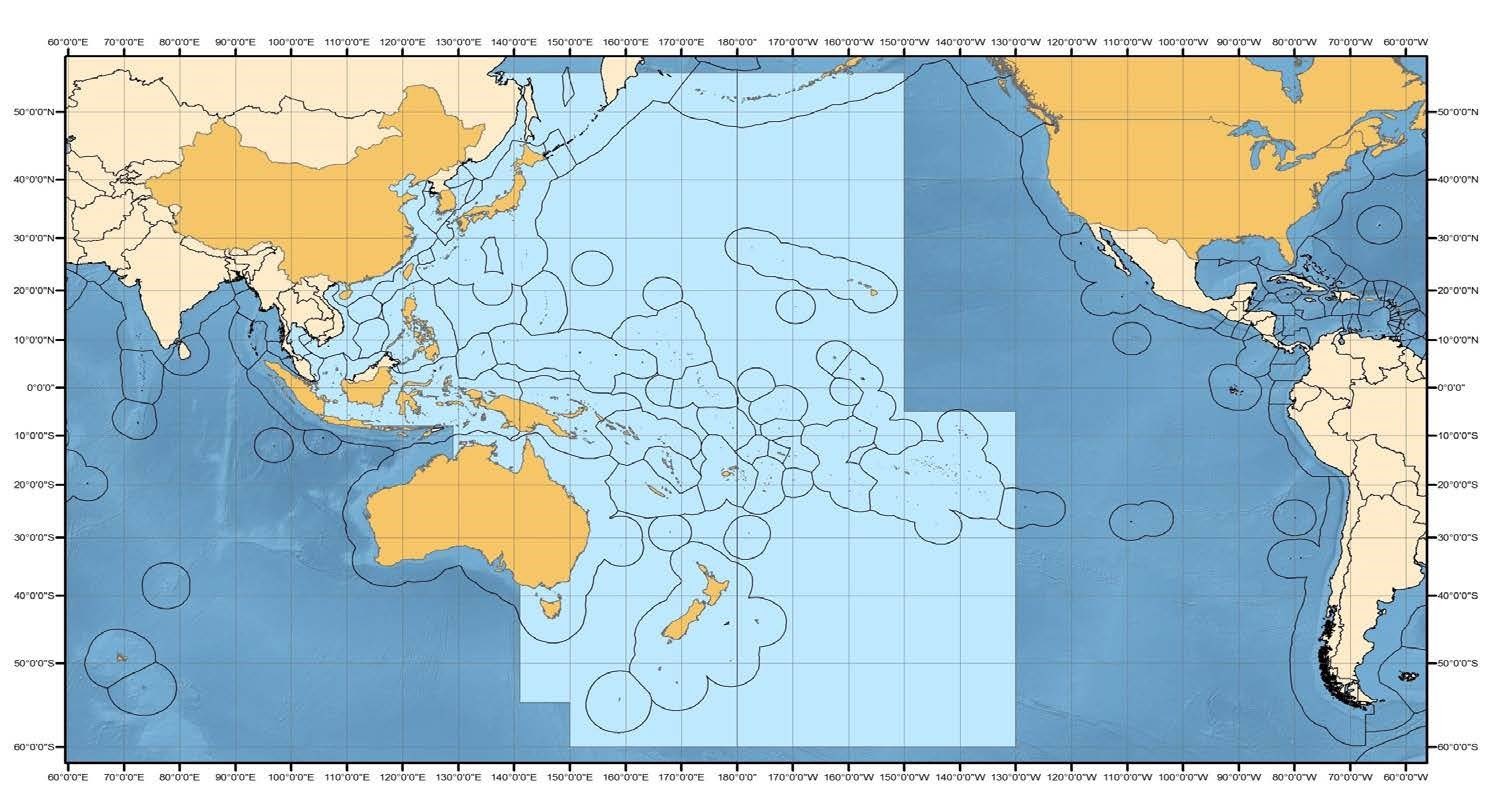
The WCPFC Convention applies to the high seas of the Western Central Pacific, including Hawaii and French Polynesia.
Reference: Conservation and Management Measure on the Regulation of Transshipment
Transshipments between vessels in the Convention Area may only be conducted with vessels in any of the following categories:
- Vessels flagged to a Member or Cooperating Non-Member of the WCPFC. The current list of WCPFC Members and cooperating Non-Members is maintained on the WCPFC Web site at http://www.wcpfc.int/.
- Vessels on the WCPFC Record of Fishing Vessels. The current WCPFC Record of Fishing Vessels is maintained on the WCPFC Web site at http://www.wcpfc.int/
Pre and Post Transshipment Reporting Requirements for Transshipment Vessels
A pre- and post- WCPFC Transshipment Declaration (TD) shall be completed by both the offloading and receiving vessel for each transshipment activity in the WCPFC Convention Area. The vessel Operator/Master shall provide these TDs directly to the WCPFC Secretariat with copy to: Transshipment@wcpfc.int; transshipment@nafaa.gov.lr; and transshipment@liscr.com.
Where transshipment occurs on the high seas, the timeline to report is as follows:
- Pre-Transshipment: Provide the WCPFC Executive Director with a Transshipment Notification 36 hours in advance of each transshipment activity.
The information to be included in the WCPFC Transshipment Notification:
- the name and WCPFC Identification Number (WIN) of the offloading vessel,
- the name and WIN of the receiving vessel,
- the product (including species and its processed state) to be transshipped,
- the tonnage by product to be transshipped,
- the date and estimated or proposed location of transshipment (latitude and longitude to a tenth of a degree with a margin of error of 24 nautical miles), and
- the geographic location of the highly migratory fish stock catches.
- Post-Transshipment: Provide the WCPFC Executive Director with a Transshipment Declaration within 15 days of completion of each transshipment activity. The information to be included in the WCPFC Transshipment Declaration:
- the name of the fishing vessel and its WIN,
- the name of the receiving vessel and its WIN,
- the quantity of product (including species and its processed state),
- the state of fish (fresh or frozen) to be transshipped,
- the geographic location to be transshipped,
- if applicable, the name and signature of the WCPFC Observer of the transshipment,
- the quantity of product already on board the receiving vessel and the geographic origin.
3. Observer Coverage Requirements
Observer coverage is required for all transshipments at sea in the Convention Area, unless the transshipment is an emergency transshipment. In case of an emergency transshipment, the WCPFC Executive Director must be notified of the transshipment and the circumstances giving rise to the force majeure within 12 hours of the completion of transshipment.
Observers will monitor and confirm to the extent possible that the transshipped quantities of fish are consistent with other information available to the observer, which may include:
- the catch reported in the transshipment declaration;
- data in catch and effort log sheets, including catch and effort log sheets reported to coastal States for fish taken in waters of such coastal States;
- vessel position data; and
- the intended port of landing.
The owner or operator of a vessel required to carry a WCPFC Observer during transshipment at sea must provide notice to the Competent Authority at least one (1) month prior to the transshipment trip in order to schedule an observer with one of the WCPFC participating ROP providers. Fees and other travel costs for observers are borne by the receiving vessels.
The notice must include the following information;
a. the IMO number and WCPFC Identification Number (WIN) of the vessel b. the name of the vessel;
- the intended departure date, time, and location;
- the name of the operator (i.e., master on board) of the vessel;
- a telephone number at which the vessel owner or operator or designated agent may be contacted during the business day
4. Rights and responsibilities of vessel operators, Masters and Crew
- The rights of vessel operators and masters shall include:
- Expectation that a reasonable period of prior notice of the placement of an ROP observer shall be given.
- Expectation that the observer will comply with the general rules of behavior, hierarchy, and laws and regulations of the Administration.
- Timely notification from the observer provider on completion of the observer’s trip of any comments regarding the vessel operations. The Master shall have the opportunity
to review and comment on the observer’s report, and shall have the right to include additional information deemed relevant or a personal statement.
- Ability to conduct lawful operations of the vessel without undue interference due to the observer’s presence and performance of necessary duties.
- Ability to assign, at his or her discretion, a vessel crew member to accompany the observer when the observer is carrying out duties in hazardous areas.
- The responsibilities of vessel operators and master shall include:
- Accepting onboard the vessel any person identified as an observer under the ROP when required by the Commission.
- Assisting the ROP observer to safely embark and disembark the vessel at an agreed upon place and time.
- Allow and assist the ROP observer to carry out all duties safely.
- Allowing ROP observer full access to the vessel’s records including vessel logs and documentation for the purpose of records inspection and copying.
- Allowing reasonable access to navigational equipment, charts and radios, and reasonable access to other information relating to fishing.
- The responsibilities of the vessel crew shall include:
- Not assaulting, obstructing, resisting, intimidating, influencing, or interfering with the ROP observer or impeding or delaying observer duties.
- Compliance with regulations and procedures established under the Convention and other guidelines, regulations, or conditions established by the CCM that exercises jurisdiction over the vessel.
- Allowing and assisting full access to and use of all facilities and equipment of the vessel which the observer may determine is necessary to carry out his or her duties, including full access to the bridge, fish onboard, and areas that may be used to hold, process, weigh, and store fish.
- Allow and assist the ROP observer to carry out all duties safely.
- Allow and assist the ROP observer to remove and store samples from the catch.
- Compliance with directions given by the Master with respect to the ROP observer’s duties.
5. Boarding and Inspection
Masters’ must accept boarding and inspection by authorized WCPFC inspectors. Authorized inspectors will have the authority to inspect the vessel, its license, gear, equipment, records, facilities, fish and fish products and any relevant documents necessary to verify compliance with the conservation and management measures in force pursuant to the WCPFC Convention. During the conduct of a boarding and inspection, the Master of the fishing vessel shall:
- Follow internationally accepted principles of good seamanship so as to avoid risks to the safety of authorized inspection vessels and inspectors;
- Accept and facilitate prompt and safe boarding by the authorized inspectors;
- Cooperate with and assist in the inspection of the vessel pursuant to these procedures;
- Allow the inspectors to communicate with the crew of the inspection vessel, the authorities of the inspection vessel, as well as with the authorities of the fishing vessel being inspected;
- Provide them with reasonable facilities, including, where appropriate, food and accommodation; and facilitate safe disembarkation by the inspectors.
6. Prohibitions Pursuant to WCPFC
- Liberian flagged vessels are prohibited from retaining on board, transshipping, or landing any part or whole carcass of a mobulid ray, and require prompt release alive and unharmed
any mobulid ray that is caught, in accordance with safe handling practices…Vessels are to surrender any unintentionally landed mobulid rays to the relevant government authorities at the point of landing or transshipment, or discard them where possible, and should allow observers to collect biological samples of mobulid rays that are caught and dead.
- Liberian flagged vessels are prohibited from retaining onboard, transshipping, landing, or trading any fins harvested in contravention of WCPFC CMMs.
- Liberian flagged vessels are prohibited from retaining onboard, transshipping, or landing any oceanic whitetip shark and/or silky shark caught in the Convention Area, in whole or in part, in the fisheries covered by the WCPFC Convention.
7. Transshipping in the Eastern High Seas Pocket (E-HSP)
Area of Application:
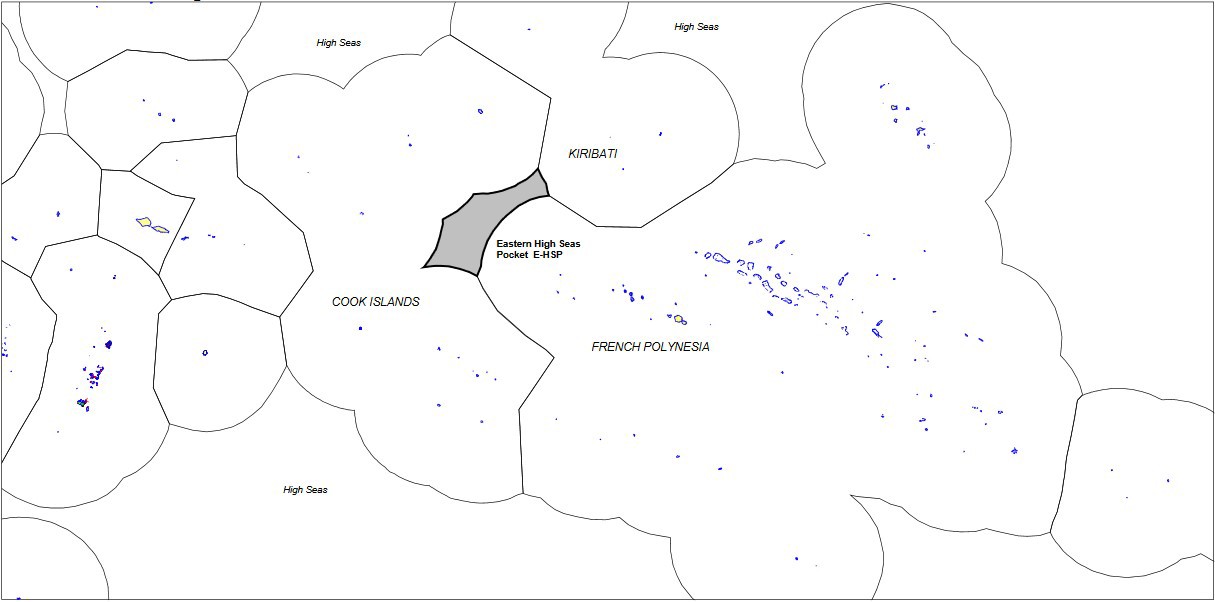
The E-HSP is the area of high seas bounded by the Exclusive Economic Zones of the Cook Islands to the west, French Polynesia to the east and Kiribati to the north. For the purposes of this measure, the precise coordinates (geodetic information) shall be that used by the WCPFC VMS.
Reporting:
Vessels shall submit reports directly to: Transshipment@wcpfc.int; transshipment@nafaa.gov.lr and transshipment@liscr.com at least 6 hours prior to entry and no later than 6 hours prior to exiting the EHSP.
Such reports shall also contain estimated catch (kilograms) onboard. This information will immediately be transmitted by the Commission Secretariat to the adjacent coastal states/territories, and shall be considered non-public domain data.
Vessels operating in the E-HSP are to report sightings of any fishing vessel to the Commission Secretariat. Such information shall include: date, time, position, bearing, markings, speed, and vessel type. This information must be transmitted to transshipment@nafaa.gov.lr and transshipment@liscr.com as soon as practicable, but not later than 15 days after the trip completion.
Transshipment:
Any transshipment activities undertaken in the E-HSP shall be in accordance with applicable CMMs. Vessels intending to transship (either unloading or receiving) in the E-HSP shall indicate this to the Commission and the Liberian FMC, in the reporting format as described above.
Eastern High Seas Pocket
* * * * *
WCPFC Convention Area
ANNEX 2
SOUTHERN PACIFIC REGIONAL FISHERIES MANAGEMENT
ORGANIZATION (SPRFMO)
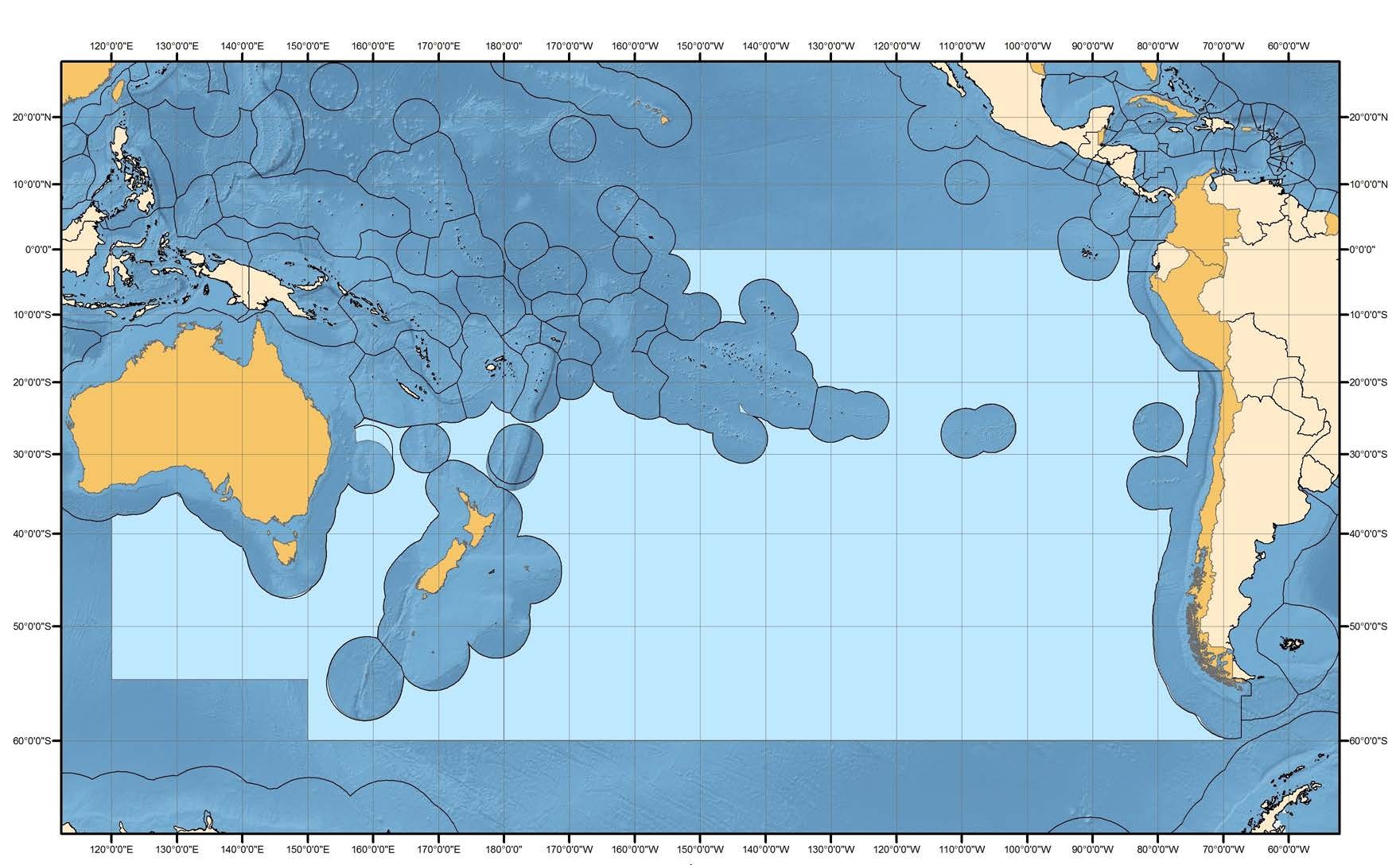
SPRFMO Convention Area applies to the high seas of the South Pacific
Reference: Conservation and Management Measure for the Regulation of Transshipment and Other Transfer Activities
Transshipments at sea and in port shall only be undertaken between vessels included in the SPRFMO Commission’s Record of Vessels. At sea transfer of fuel, crew, gear or any other supplies between two vessels in the Convention Area shall only be undertaken between vessels included in the Commission’s Record of Vessels.
Advance and Post-Transshipment Reporting Requirements for Transshipment Vessels
A SPRFMO pre-Transshipment Notification and post-Transshipment Declaration (TD) shall be completed for each transshipment activity in the RFMO Convention Area.
1. Pre-Transshipment
An advance notification is needed for each transshipment activity which includes transshipment of Trachurus Murphyi and demersal species caught in the Convention Area, regardless of where the transshipment takes place, at least 36 hours before the estimated time of such activities. Please refer to
Annex A for the details to be included in the notification, and should be sent to Secretariat@sprfmo.int.
2. Post-Transshipment
No later than 7 days after transshipment is carried out, the vessel involved must send a TD to: Secretariat@sprfmo.int; transshipment@nafaa.gov.lr, and transshipment@liscr.com.
*Regional Observer Program
An observer monitoring transshipment shall complete a transshipment log sheet to verify the quantity and species of the fishery resources being transshipped, and shall provide a copy of the log sheet to the competent authorities of the observed vessel. The competent authorities of the observed vessel shall submit the observer data of the log sheet to the Secretariat, no later than 15 days from debarkation of the observer.
Boarding and Inspection
SPRFMO’s procedures on at sea inspection in the Convention Area are parallel to those contained in Articles 21 and 22 of the United Nations Fish Stocks Agreement. This measure is effective until such time as the Commission adopts a specific SPRFMO at sea inspection regime.
http://www.un.org/depts/los/convention_agreements/convention_overview_fish_stocks.htm
Transshipment Notification
Members and CNCPs shall provide the following information:
Details of unloading vessel
- Name of vessel
- Registration number
- Radio call sign
- Vessel flag state
- IMO number (if applicable)
- Name and nationality of vessel master
Details of receiving vessel
- Name of vessel
- Registration number
- Radio call sign
- Vessel flag state
- IMO number (if applicable)
- Name and nationality of vessel master
Transshipment information to be reported
No later than 7 days after a transshipment is carried out, the competent authorities of the vessels involved shall report to the Secretariat:
Details of unloading vessel
- Name of vessel
- Registration number
- Radio call sign
- Vessel flag state
- IMO number (if applicable)
- Name and nationality of vessel master
Details of receiving vessel
- Name of vessel
- Registration number
- Radio call sign
- Vessel flag state
- IMO number (if applicable)
- Name and nationality of vessel master
Details of transshipment operation
- Date and time of commencement of transshipment (UTC)
- Date and time of completion of transshipment (UTC)
- If transshipped in port, Port State, name of port and port code
- If transshipped at sea: Position (nearest 1/10th degree) at commencement of transshipment (decimal); Position (nearest 1/10th degree) at completion of transshipment (decimal)
- Hold numbers in receiving vessel in which product is stowed
- Destination port of receiving vessel
- Arrival date estimate
- Landing date estimate
Details of fishery resources transshipped
- Species transshipped (Description of fish, by product type (e.g., whole, frozen fish; Number of cartons and net weight (kg) of product, by species; Total net weight of product transshipped)
- Fishing gear used
Verification (if applicable)
- Name of observer
- Authority
ANNEX 3
INDIAN OCEAN TUNA COMMISSION (IOTC)
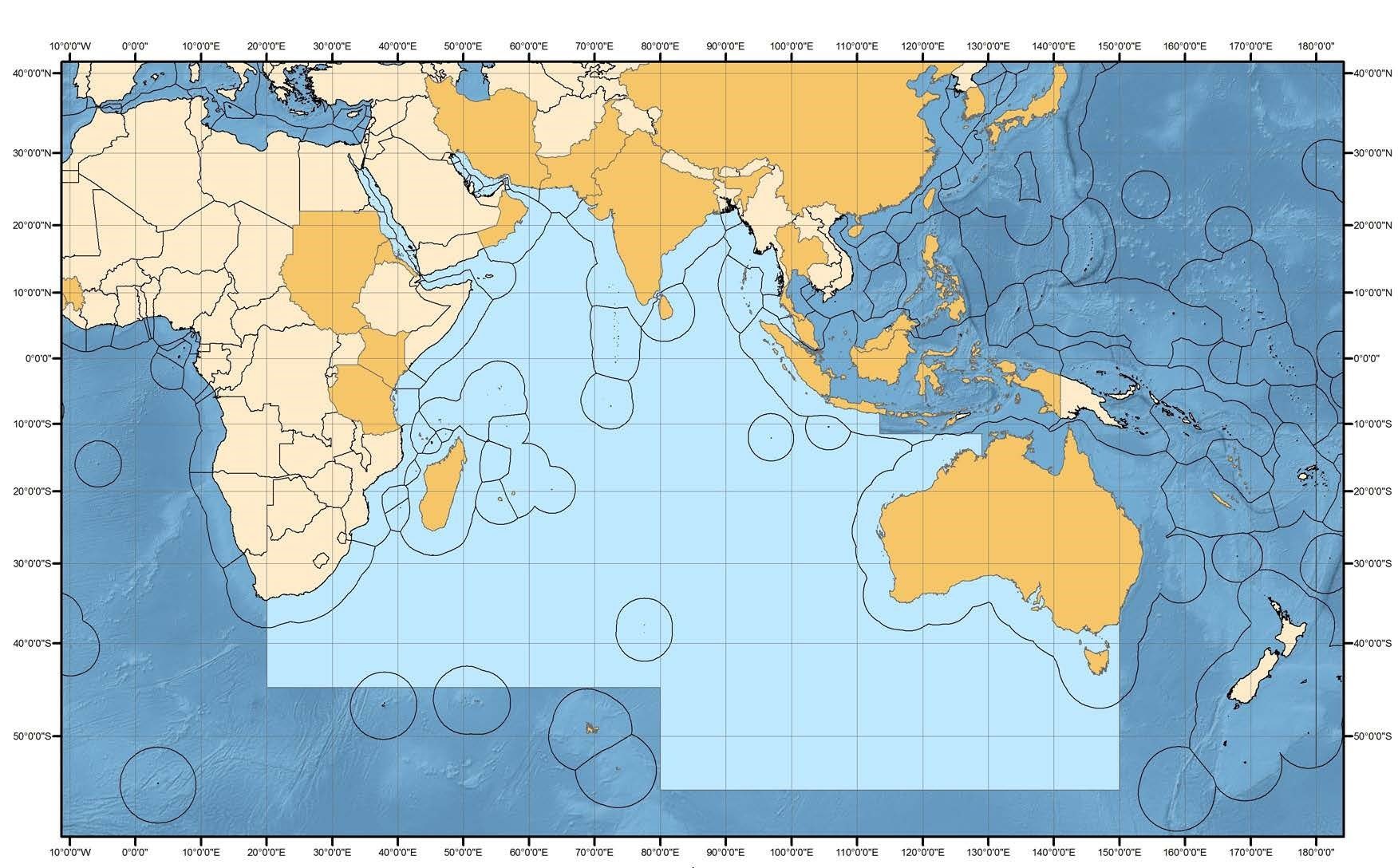
The IOTC Area of Competence is the Western Indian Ocean and the Eastern Indian Ocean
Reference: Resolution 23/05 Establishing a Program for Transshipment
Transshipment Regulations
Pre-Transshipment
Before starting transshipment, the Master of the receiving vessel shall confirm that the Largescale Tuna Longline Fishing Vessel (LSTLV) has obtained prior authorization from their flag State and is included on the IOTC’s Record of Vessels.
Post-Transshipment
The Master of the receiving vessel shall complete and transmit the Transshipment Declaration (TD) to transhipment@iotc.org; transshipment@nafaa.gov.lr, transshipment@liscr.com within 24 hours of the completion of the transshipment.
Pre-Landing
The Master of the receiving carrier vessel shall, 48 hours before landing, transmit an IOTC TD, along with its number in the IOTC Record of Carrier Vessels authorized to receive transshipment in the IOTC area of competence, to the competent authorities of the State where the landing takes place. The TD may be sent by fax or email.
In-Port Transshipment
Not later than 24 hours before the beginning and at the end of the transshipment, the master of the receiving carrier vessel shall inform the port State authorities of the quantities of tuna and tuna-like species and sharks transshipped to his vessel, and complete and transmit the IOTC TD to the competent authorities within 24 hours.
Regional Observer Program
Owners, Operators or Masters are required to notify the Competent Authority at least one (1) month before a planned transshipment in the IOTC Convention Area to request an observer.
The observer tasks shall be to monitor the vessel’s compliance with the relevant conservation and management measures adopted by the Commission. In particular, the observers shall:
- record and report upon the transshipment activities carried out;
- verify the position of the vessel when engaged in transshipping;
- observe and estimate products transshipped;
- verify and record the name of the LSTLV concerned and its IOTC number;
- verify the data contained in the transshipment declaration;
- certify the data contained in the transshipment declaration;
- countersign the transshipment declaration; and
- issue a daily report of the carrier vessels transshipping activities.
- The responsibilities regarding observers of the receiving vessels and their Masters shall include:
- Observers shall be allowed access to the vessel personnel and to the gear and equipment;
- Upon request, observers shall also be allowed access to: 1) Satellite navigation equipment; 2) Radar display viewing screens when in use; 3) Electronic means of communication.
- Observers shall be provided accommodation, including lodging, food and adequate sanitary facilities, equal to those of officers;
- Observers shall be provided with adequate space on the bridge or pilot house for clerical work, as well as space on deck adequate for carrying out observer duties; and
- The flag States shall ensure that captains, crew and vessel owners do not obstruct, intimidate, interfere with, influence, bribe or attempt to bribe an observer in the performance of his/her duties.
- Other obligations for transshipment vessels:
- Observers shall be allowed access to the vessel personnel, the gear and equipment;
- Upon request, observers shall also be allowed access to the following equipment: Satellite navigation equipment; Radar display viewing screens when in use; Electronic means of communication.
- Observers shall be provided accommodation, including lodging, food and adequate sanitary facilities, equal to those of officers;
- Observers shall be provided with adequate space on the bridge, as well as space on deck adequate for carrying out observer duties; and
- Masters, crew and vessel owners shall not obstruct, intimidate, interfere with,
influence, bribe or attempt to bribe an observer in the performance of his/her duties.


ANNEX 4
INTERNATIONAL COMMISSION FOR THE CONSERVATION OF ATLANTIC TUNAS (ICCAT)
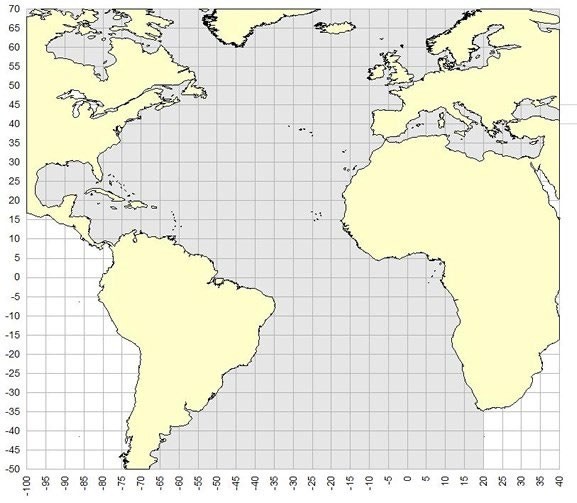
The ICCAT Convention applies to all waters of the Atlantic Ocean, including the adjacent Seas.
Reference: Recommendation by ICCAT establishing a program for transshipment
Post Transshipment (Receiving Vessel)
The Master of the receiving vessel shall complete and transmit the ICCAT Transshipment Declaration (TD) to: info@iccat.int; transshipment@nafaa.gov.lr; and transshipment@liscr.com.
Pre-Landing
The Master of the receiving vessel shall, 48 hours before landing, transmit an ICCAT TD, along with its number in the ICCAT Record of Vessels authorized to receive transshipment in the ICCAT area, to the competent authorities of the State where the landing is to take place.
In Port
Pre-Transshipment
Not later than 24 hours before the beginning of the operation, the Master of the receiving vessel shall inform the Port State authorities of the quantities of catches of tuna and tuna-like species to be transshipped to his vessel, and complete and transmit the ICCAT TD to the competent authorities and the ICCAT.
Post Transshipment
Not later than 24 hours from the completion of the transshipment, the Master of the receiving vessel shall inform the Port State authorities of the quantities of catches of tuna and tuna-like species transshipped to his vessel, and complete and transmit the ICCAT TD to the competent authorities and the ICCAT.
Pre-Landing
The Master of the receiving vessel shall, at least 48 hours before landing, complete and transmit an ICCAT TD to the competent authorities of the landing State where the landing takes place, with a copy to the Administration.
Regional Observer Program (ROP)
Vessels included in the ICCAT Record of Vessels authorized to receive transshipments in the ICCAT area and which transship at sea, are to carry an ICCAT Observer during each transshipment operation in the Convention area.
In order for receiving vessels to receive transshipments of ICCAT species at sea, the following conditions must be met:
- The receiving vessel must be authorized by its flag State to operate in the Atlantic and be included in the ICCAT Record of Carrier Vessels;
- Receiving vessels must have an observer from the ICCAT ROP on board when receiving atsea transshipments;
- Receiving vessels Masters/Operators must sign a Memorandum of Understanding (MOU) with
MRAG & COFREPECHE (the consortium); and
- Pass a pre-sea inspection by the observer before embarkation.
1) Obligations of the Observer
The observer shall monitor the LSPLV’s and carrier vessel’s adherence to the relevant CMMs adopted by the Commission. The observers’ tasks shall be, in particular, to visit the LSPLV intending to transship to a carrier vessel and before the transshipment takes place to:
- Check the validity of the fishing vessel’s authorization or license to fish for tuna and tuna-like species and any other species caught;
- Inspect the fishing vessel’s prior authorizations to transship at sea from the flag CPC
and, if appropriate, the coastal State;
- Check and record the total quantity of catch on board by species and, if possible, by
stock, and the quantities to be transshipped to the carrier vessel;
- Check that the VMS is functioning and examine the logbook and verify entries;
- Verify whether any of the catch on board resulted from transfers from other vessels, and check the documentation on such transfers;
- In the case of indication that there are any violations involving the fishing vessel, immediately report the violation(s) to the master of the carrier vessel and to the observer program implementing company;
- Record the results of these duties on the fishing vessel in the observer’s report.
2) Responsibilities of the Masters of Carrier Vessels
- Observers shall be allowed access to the vessel personnel, pertinent documentation, and to the gear and equipment;
- Upon request, observers shall also be allowed access to equipment;
- Observers shall be provided accommodations, including lodging, food and adequate
sanitary facilities, equal to those of officers;
- Observers shall be provided with adequate space on the bridge or pilot house for
clerical work, as well as space on deck adequate for carrying out observer duties;
- Observers shall be allowed to determine the most advantageous location and method for viewing transshipment operations and estimating species and quantities transshipped;
- The Master of the carrier vessel shall ensure that all necessary assistance is provided to the observer to ensure safe transport between the carrier and fishing vessels should weather and other conditions permit such an exchange; and
- Ensure that Masters, crew and vessel owners do not obstruct, intimidate, interfere with,
influence, bribe or attempt to bribe an observer in the performance of his/her duties.
Port Inspection
Vessels must allow inspections to be carried out by a competent authority of the port State.
Each year, port States shall inspect at least 5% of landing and transshipment operations in their designated ports as are made by foreign fishing vessels. Inspections shall involve the monitoring of the landing or transshipment and include a cross-check between the quantities by species. Inspections shall be carried out in such a way that the fishing vessel suffers the minimum interference and inconvenience, and that degradation of the quality of the catch is avoided, to the extent practicable.


ANNEX 5
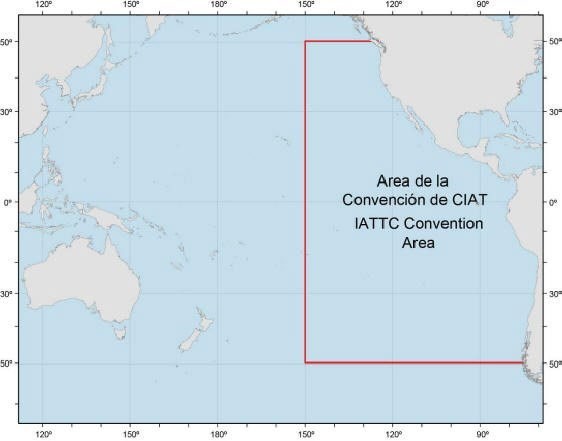
Inter-American Tropical Tuna Commission (IATTC)
Reference: IATTC RESOLUTION C-22-03, Establishing a Program for Transshipments for Large-scale Fishing Vessels
Post Transshipment
The Master of the receiving carrier vessel shall complete and transmit the IATTC Transshipment Declaration (TD) to: Transshipments@iattc.org; transshipment@nafaa.gov.lr, and transshipment@liscr.com within 24 hours of the completion of the transshipment.
Pre-Landing
The Master of the receiving carrier vessel shall, 48 hours before landing, transmit an IATTC TD along with its number in the IATTC Record of Carrier Vessels, to the competent authorities of the CPC where the landing takes place.
In Port
Pre-Transshipment
Not later than 24 hours before the beginning of the operation, the Master of the receiving carrier vessel shall inform the Port State authorities of the quantities of catches of tuna and tuna-like species transshipped to his vessel, and complete and transmit the TD to the competent authorities.
Post-Transshipment
Not later than 24 hours at the end of the operation, the Master of the receiving carrier vessel shall inform the Port State authorities of the quantities of catches of tuna and tuna-like species transshipped to the carrier vessel, and complete and transmit the TD to the competent authorities.
Pre-Landing
The Master of the receiving carrier vessel shall, at least 48 hours before landing, complete and transmit a TD to the competent authorities of the landing State where the landing takes place.
Regional Observer Program
Carrier vessels included in the IATTC Record of Vessels which transship at sea are required to carry an IATTC observer during each transshipment operation in the Convention Area.
Vessels must contact the Administration at least one (1) month prior to transshipping in the IATTC convention area to allow time to obtain an observer.
Obligations of Carrier Vessels
The responsibilities regarding observers of the carrier vessels and their Masters shall include the following, notably:
- Observers shall be allowed access to the vessel personnel and to the gear and equipment;
- Upon request, observers shall also be allowed access to the following equipment, if present on the vessels to which they are assigned, in order to facilitate the carrying out of their duties: i. satellite navigation equipment;
ii. radar display viewing screens when in use; and iii. iii. electronic means of communication.
- Observers shall be provided accommodations, including lodging, food and adequate sanitary facilities, equal to those of officers;
- Observers shall be provided with adequate space on the bridge or pilot house for clerical work, as well as space on deck adequate for carrying out observer duties; and
- The flag CPCs shall ensure that Masters, crew and vessel owners do not obstruct, intimidate, interfere with, influence, bribe or attempt to bribe an observer in the performance of his/her duties.
* * * * *