
Marine Operations Note: 02/2021 - Australian Ports – Measures to mitigate Port State control actions and detentions
15 June 2021
Marine Operation Note 02/2021
15 June 2021
Marine Operations Note: 02/2021
(This Advisory supersedes Marine Advisory 06/2018)
SUBJECT: Australian Ports – Measures to mitigate Port State control actions and detentions
To: Owners, Operators, Masters and Recognized Organizations
A. Background
The Australian Maritime Safety Authority (AMSA) has communicated that it supports flag States, such as Liberia, performing flag State responsibilities for vessels operating under its flag visiting Australian ports, including when the flag State:
1. Inspects a vessel in Australia as part of a programmed inspection under flag State control; or, 2. Attends a vessel in Australia in response to an incident or event.
In both cases, the flag will take the lead in actively assessing the vessel for compliance with relevant requirements. AMSA may assist the flag in this process and may refrain from conducting a port State control inspection. However, an AMSA surveyor may still attend and advise the flag State inspector of any issues they may note.
B. Procedure
In order to implement this process, Owners, Operators, Masters and Recognized Organizations should note the following instructions:
- Liberia, either through the Prevention Department or through the attending flag State inspector, will advise the owner, operator, Master by email and AMSA in writing to email: psc@amsa.gov.au that an attendance has been arranged and will describe the purpose of such attendance. Please contact Liberia’s Prevention Department prior to your arrival at prevention@liscr.com to arrange an attendance if assistance is needed.
- The Liberian flag State inspector will inspect the vessel to verify compliance using the Liberian flag State Inspection Form. It is recommended that the crew uses the form as a tool to verify that all areas and equipment are in good working condition.
- If deficiencies are found, the flag State inspector is to communicate them to AMSA. At this point, Liberia’s Prevention Department will provide the Master the necessary requirements that must be met prior to departure and will apply the appropriate controls to ensure that any deficiencies are rectified prior to departure from Australia.
- Before any dispensations or exemptions are issued, the Liberia’s Prevention Department will consult AMSA in order to provide a unified set of requirements.
In cases where the flag State inspector attends at the same time as an AMSA Marine Surveyor, the flag State inspector will take the lead in assessing the vessel for compliance with relevant requirements and the AMSA surveyor will advise the flag State inspector of any issues they may note.
C. Port State Control Inspection
1. Before the inspection
Before the start of an inspection, the Master will receive a letter indicating that the ship will be inspected. A sample of the letter has been included as Appendix I to this Marine Operations Note.
In preparation to an AMSA PSC inspection, the authorities require to have the following are ready for the AMSA surveyor:
- documentation and certificates onboard ready for inspection;
- equipment ready for testing; and
- additional restraints to be fitted before entering a lifeboat, if it cannot be demonstrated that the lifeboat arrangements are correctly set.
2. During the inspection
- It is important to notify the Liberian inspector and AMSA surveyor onboard of any known problems. Detainable deficiencies may not require the ship to be detained if you let us know before the inspection.
- The inspector will check that the ship has valid certificates and documentation and it is complying with the certificates, and overall conditions of the ship, equipment and its crew.
- If there are one or more problems in the initial inspection, a more detailed inspection may be done.
- For all inspections a form A is completed to indicate that an inspection has been carried out.
3. After a port State control inspection
- If deficiencies are found during an inspection, the vessel may be detained until these deficiencies can be resolved. Minor deficiencies may be corrected during the inspection.
- If the inspector considers there are clear grounds for a detention of the ship due to the severity of the deficiencies, it will be detained regardless of the ship's scheduled departure time.
- If the deficiencies cannot be closed during the port stay, the authorities should notify the Administration at prevention@liscr.com and the authorities at psc@amsa.gov.au when they have been resolved.
If you have questions, please contact us. We will respond as soon as possible. There may be a delay in our response while we investigate the enquiry and speak to the inspector that did your inspection or involved manager.
D. Marine Safety Concerns and Their Reporting
- A marine safety concern includes any event that endangers, or if not corrected could endanger, the safety of vessels or persons. Examples of marine safety concerns include:
- Reporting
- substandard condition of hatches, water tight doors or openings
- substandard condition of machinery or steering systems
- unsafe engine control room procedures
- unsafe pilot access (for example, pilot ladders)
- crew schedules that result in fatigue
- a modification of the vessel’s equipment or fittings that has not been approved by the appropriate authority
- inadequate passage planning
- inadequate navigational equipment, charts or publications
There are two ways to submit a marine safety concern to AMSA:
- report a marine safety concern online
- download and email the completed report a marine safety concern form 355 to reports@amsa.gov.au
E. Maritime Labour Compliance Issues
On 28 February 2021, AMSA cancelled the Marine Notice which permitted seafarers to serve longer than 11 months without leave. This means that AMSA inspectors will verify compliance with Regulation 2.4, of the Maritime Labour Convention ensuring seafarers serve no longer than 11 months continuously on board a vessel.
Most Common Deficiencies
In addition to offering the assistance of our flag State inspectors, we have included Appendix II for your information and action before entering an Australian port.
For further information regarding the issuance of this Advisory, please contact the Fleet Performance Department at +1 (703) 790 3434 or prevention@liscr.com.
* * * * *
Appendix I
Port State Control Inspection Sample Letter
Dear Master,
MV ……………....................................................………
Australia takes port State control (PSC) very seriously and considers it to be an essential tool in ensuring the safety and welfare of seafarers and protection of the marine environment. Thank you for your time and support in this process.
In undertaking my duties as a PSC inspector I commit that I will act with professionalism, integrity, honesty and courtesy whilst on board your ship.
Further I undertake to observe all fair and reasonable requests from you during my time on board. If at any time you think I have not acted appropriately please tell me and you can also provide your views to PSC@amsa.gov.au.
I can assure you such communication will be taken seriously.
For your information, it is illegal to offer any inducements (bribes) to PSC inspectors. PSC inspectors will not only reject such offers but will report them to AMSA management, who will take appropriate action. AMSA acknowledges the generous spirit in which gifts are sometimes offered but to remove any possible misconceptions I am under strict instructions not to accept gifts. Please do not be insulted by this.
………………………. …………………… ………………… Date Name of Inspector Signature
DOCUMENTATION
To expedite the PSC inspection process AMSA finds it useful to give Masters these lists of documentation and other items that comprise the major part of our PSC inspections. If possible, our PSC inspector will advise if a particular item is not required but it must be noted that the lists are not exhaustive. During this inspection kindly ensure a responsible member of the crew is available to accompany the PSC inspector at all times around the vessel.
It would be helpful if the following documentation could be assembled together in one location for the inspection:
- Ship’s Certificates
- Crew List
- Last PSC Inspection Report
- Officer and Crew Certificates of Competency with
STCW endorsements and Certificates of
Recognition
- Approved Stability Information
- Official Log Book
- Record of Drills
- ECDIS Certification and licences (Vessel / Company)
- Garbage Management Plan and Record Book
- Oil Record Book
- SOPEP Manual / SMPEP / SEEMP
- Class Survey Report (Including Enhanced Survey
Documentation if Applicable)
- Master’s Review of ISM
- Gas Detector Calibration Certificate (Bulk
Carriers and Oil Tankers)
- Cargo Securing Manual
- Cargo Gear Record Book
- SOLAS Training Manual
- Shipper’s Declaration / Cargo MSDS
- Cargo Loading / Discharge Plan
- Ship / Shore Safety Check List
- P & A Manual (Chemical Tankers)
- Document of Compliance (Dangerous Goods)
- Document of Compliance (Grain Loading)
- Document of Compliance IMSBC Code
- Annual Test Reports; EPIRB, AIS, VDR,
- LRIT Conformance Test Report
- Shore Based Maintenance Agreement (Radio
Equipment)
- Copy of Watch Schedule (at Sea and In Port) and
Hours
of Rest Records
- P&I Certificate of Entry
- Continuous Synopsis Record
(Bunker/Oil Pollution) I will also require to operationally test the following items of equipment as a minimum |
- International Civil Liability Insurance Certificate
- Funnel Flaps and Engine Room Fan Dampers
(PLEASE UNLOCK FUNNEL ACCESS DOOR)
- Emergency Fire Pump (ARRANGE 1 FIRE HOSE FWD
AND 1 FIRE HOSE AFT)
- Emergency Generator (No Blackout) -
SEQUENCE
TESTING
- Oily Water Separator (No Discharge Overboard)
- Fire control station / CO2 Room
- Lifeboat Engines (PLEASE SEE LASHING
PHOTO’S)
- GMDSS Radio
- Radar
- SART / EPIRB
- ECDIS
I will also require to access the lifeboats. I require that additional restraints are fitted to the lifeboats between the davits and the lifting gear to enhance safety whilst inside the boats. I will assess the arrangements provided prior to my entry into the lifeboats but you should determine the nature of the arrangements that you will use in this respect and you must ensure that the arrangements are removed after the inspection.
AMSA INSPECTORS ENTERING LIFEBOATS
The maritime industry is well aware of the number of incidents occurring world wide regarding lifeboat release arrangements. Predominately, the detentions relate to defective maintenance of the equipment. This equipment is often designed in such a way that clearances and the proper maintenance to these lifeboats is absolutely critical.
AMSA has instructed it’s inspectors that they should not rely solely on the boat harbour pins and gripes as being sufficient for an AMSA inspector to enter a lifeboat, unless it can be demonstrated to the AMSA inspector that lifeboat release arrangements are correctly set. If unable to be demonstrated, additional restraints will be required to be fitted.
The AMSA inspector will discuss this with the master early in a PSC or FSC inspection to avoid unnecessary delays. It is the master’s responsibility to determine the supplementary restraint arrangement, NOT the AMSA inspector’s; however, the AMSA inspector must be satisfied with the method used.
This requirement is for entry into the lifeboat when fully housed ONLY. The arrangement is to be removed immediately upon completion of the lifeboat inspection and under NO circumstances is the lifeboat to be swung out with the supplementary restraint fitted.
This requirement is a control mechanism AMSA has implemented to reduce the AMSA inspector’s exposure to risk.
AMSA notes the amount of work being undertaken at the IMO in regard to measures to prevent accidents with lifeboats and will continue to actively participate in the process of improving the /level of safety onboard in
general and specifically toward lifeboat arrangements
Appendix II
Common Port State Control Deficiencies (Extracted from AMSA Webpage)
a) Fire Dampers
Deficient fire dampers are a leading cause of detention. The purpose of a fire damper is to be able to stop the flow of air into a space to help stop a fire in an emergency. Correct operation of the dampers can usually be checked without needing to open the casing because of the sound that can be heard.
Common fire damper issues include:
- holes caused by corrosion and rust
- not closing at all or completely
- excessive effort required to open and close the damper.
If these issues are found, your ship will be detained until it is fixed.
Routine checks and maintenance must be done to make sure fan mechanism and attachment of discs/louvers to shafts are effective. When checking fire dampers regularly and before an inspection, make sure to check:
- they are properly marked open and closed
- the locking pins are free to be removed without excessive effort
- the operating handles are free to move without excessive force
- the operation is smooth and operates through the full range of motion.
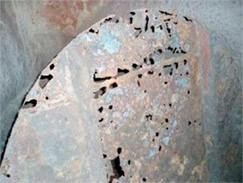
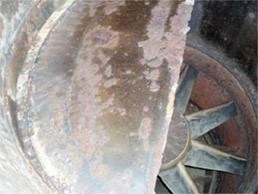
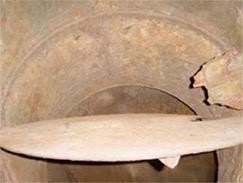
Holes in fire damper Fire damper stuck in closed Fire damper is rusty, stuck
position and it has been cut almost open and unable to in half to let air escape. move.
b) Emergency Fire Pump
The emergency fire pump must be able to adequately pressurize the fire main.
If the emergency fire pump is non-operational, your ship may be detained. If we find the following conditions, your ship will be detained:
- The pump is not able to perform at or between any draughts and no appropriate level equivalent level of safety such as a connection to shore water has been provided.
- The pump is disabled due to draught.
c) Fire Main Isolating Valve
Fire main isolating valves are an important component of the fire system and its operation will generally be checked during the inspection. Our inspector may test the engine room fire main isolating valve during the emergency fire pump test.
When maintaining and checking the emergency fire main isolating valve regularly and before an inspection, make sure to:
- test and check the condition of the fire hoses, nozzles and main
- test the fire pump and make sure it works without external priming (unless class approved)
- if fitted, test the fire pump priming system is working correctly.
d) Lifeboat
Lifeboats are essential for crew safety in an emergency. They must be checked and maintained regularly and before an inspection. Routine checks and maintenance must be done by properly trained crew members and following the manufacturer’s instructions.
Our surveyors will require additional lashings before entering the lifeboat.
When checking lifeboats regularly and before an inspection, make sure to:
- Check the release system and interlock is set correctly.
- If fitted, check the indicators are clear and in correct position.
- Keep the instructions secured in the boat.
- Check the lifeboat’s painter release is operable.
- Check the engine has enough fuel and is de-watered as necessary.
- Turn the lifeboat on and make sure there is no start delay.
- Test the propulsion allows it to go ahead and astern and that it can be steered in all directions.
- Keep the engine starting batteries maintained and in good condition.
Lifeboats may be found deficient if any of these cannot be properly demonstrated. If this happens, the ship will be detained until a lifeboat technician can fix it.
e) Lifeboat Hook and Release System
Most lifeboats in use have a hook and release system that are either:
- Off-load: the boat is floating and the weight must be off the hooks before they can be opened.
- On-load: the hooks can be opened with the load of equipment and people inside the boat.
Both types have to be regularly checked, maintained and used properly so that there is no risk that the lifeboat will fall from any height with people onboard.
f) Emergency Generator
It has been reported that port state control in Australia often points out that the onboard emergency generator fails to automatically connect to the emergency switchboard when a blackout simulation test is carried out.
SOLAS II-1/Reg.43.7 requires that provisions for the testing of the emergency source of electrical power, including its automatic starting arrangement, are to be made. Such testing can be conducted using a test switch provided in the emergency switchboard that enables automatic starting and connecting of the emergency generator to the emergency switchboard during simulated blackout conditions, in general.
Whenever a failure of the emergency source of electrical power to connect to the emergency switchboard is detected, it should be pointed out as a deficiency. Further, there is a possibility that the deficiency might be judged as a lack of proper SMS implementation and result in the detention of a vessel.
It is recommended that tests to ensure automatic starting as well as connecting of the emergency generator to the emergency switchboard shall be carried out at appropriate intervals using the test switch in the emergency switchboard for all vessels.
g) Ballast Tank Vents
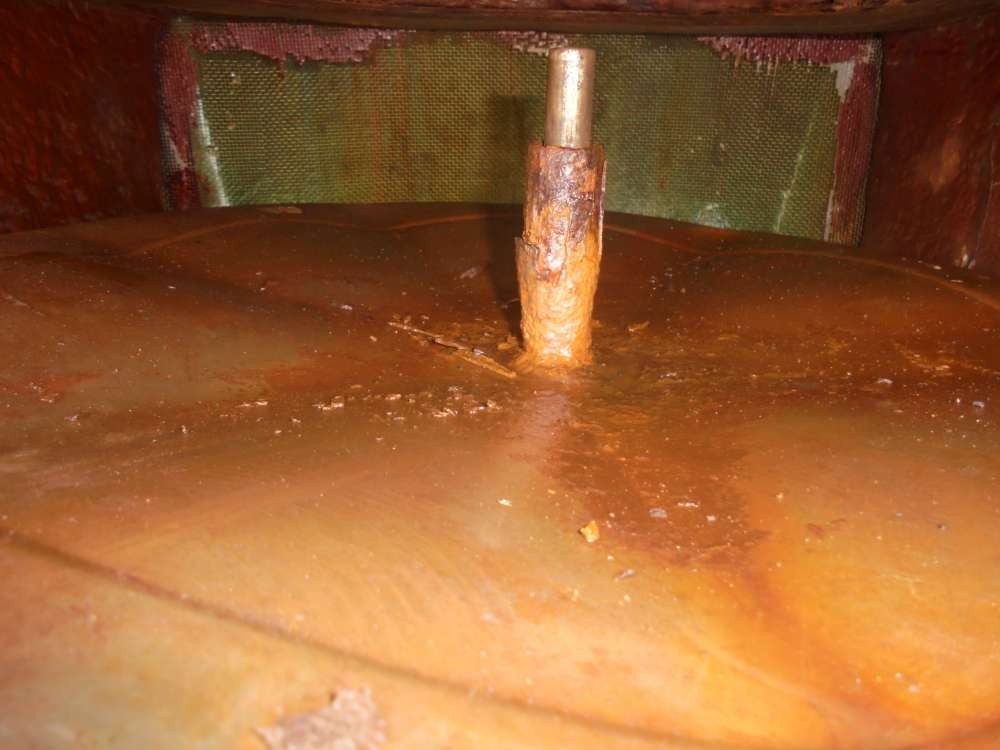
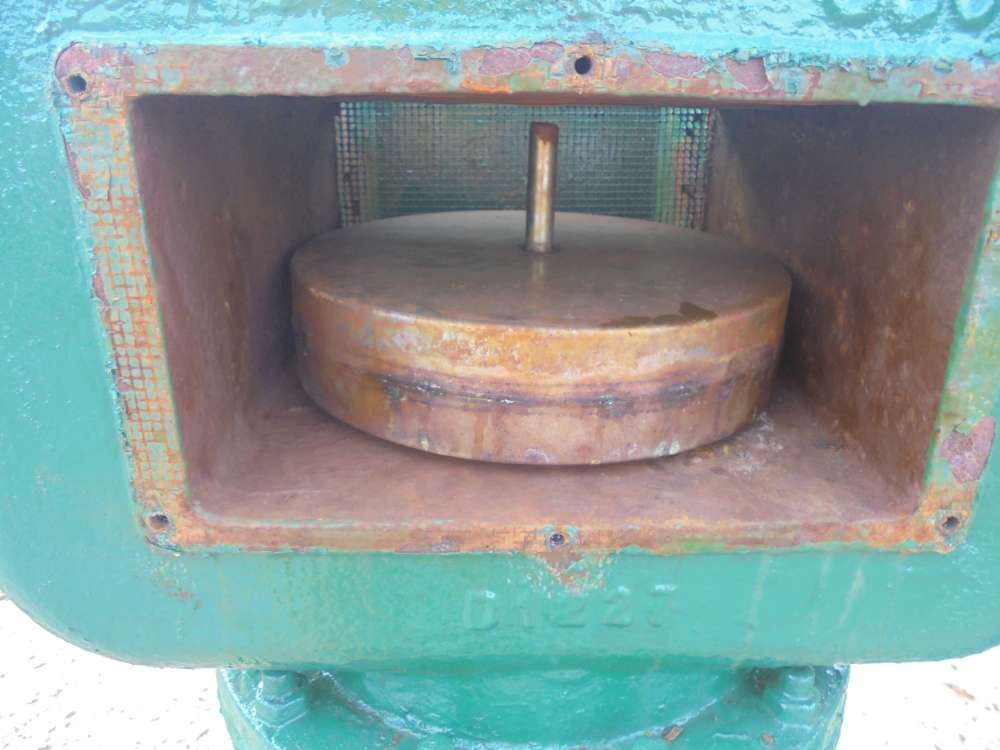
There have been several recent instances of vessels that have been detained for defective Ballast Tank Vent Closures. These detentions mainly involved a defective Ballast Vent Closure due to wastage or other failure of the closure system. Vessel operators are advised to carefully inspect the ballast vents of their vessels prior to arrival.
Ballast Tank Vent Closure checklist:
- If all floats are now free in movement
- If all rubber packings are in working condition
- If all floats can close the in-take properly
h) Oil Water Separator (OWS)
The OWS is designed with two main elements:
- the separator that separates oil and water
- the discharge monitoring device that measures the oil content of the discharged liquid.
An operational OWS is the evidence that we require to be reasonably certain that the ship complies with MARPOL.
The permitted level for oil discharge is generally 15 parts per million oil in water—a concentration at which oil is not normally visible. If permitted oil content levels are exceeded, an alarm is triggered and the discharge is shut down.
When checking OWS regularly and before an AMSA inspection, make sure to check:
- all oil record book entries completed according to MARPOL
- OWS is working properly
- that there is no oil in the discharge
- the alarm and stopping device is operational.
If any of these are found to be deficient or your oil record book is not accurately filled out, your ship may be detained.
If clear grounds exist, our inspector may also ask for a section of piping after the monitor be removed for internal inspection.
Fatigue is a safety hazard as it can reduce your ability to do your job, affects your wellbeing and can lead to accidents. Not enough sleep, night work, irregular and long working hours, repetitive tasks and high work demands can all lead to fatigue. Fatigued individuals suffer poor judgement and make bad decisions. You need to manage the risk of fatigue.
Reduce fatigue as a seafarer by:
- take regular breaks
- eat and exercise regularly
- rotate work tasks
- take naps if you can’t have a long break
- see a doctor for treatment if you think you have a sleep disorder such as insomnia or sleep apnea
- find more at the Australian Seafarers’ Welfare Council.
Reduce fatigue as a master or person in charge can do:
- Provide enough staff and resources to conduct tasks safely and effectively.
- Make sure schedules include work hours, rest periods and long sleep breaks. Keep reassessing and changing where necessary.
- Offer fatigue awareness training to seafarers and other workers.
- Arrange napping plans to use when long periods of sleep are not available. Naps are a good boost of alertness but they do not replace the need for a long period of sleep.
- Altering the ships work areas to support alertness when working such as bright lights and air ventilation.
- Altering the ships sleep areas to support sleep when resting such as dim lighting and quiet spaces if possible.


