Marine Security Advisory: 03/2017 - Enhanced security measures for vessels transiting the Singapore Straits, Malacca Straits, the waters off Mangkai & the Anambas islands in the South China Sea and operating in the coastal waters of Malaysia and Indonesia.
25 August 2017
Marine Security Advisory 03/2017
Marine Security Advisory: 03/2017
(This Advisory supersedes Marine Security Advisory 04/2014)
Subject: Enhanced security measures for vessels transiting the Singapore Straits, Malacca Straits, the waters off Mangkai & the Anambas islands in the South China Sea and operating in the coastal waters of Malaysia and Indonesia. Reference: (a) MSC.1/Circ.1334
Dear Shipowner/Operator:
Two of the main maritime security threats in South East Asia are Piracy and Armed Robbery.
The Regional Cooperation Agreement on Combating Piracy and Armed Robbery against Ships in Asia (ReCAAP), and the ReCAAP Information Sharing Centre (ISC), report that an alarming number of significant incidents in Southeast Asian waters have taken place over the past year. These incidents involve siphoning of marine gas oil/marine diesel oil, robbery of scrap metal and petty theft. In these incidents, the pirates/robbers appeared to be well organized and have good knowledge of the victim ship.
This Advisory provides the Administration’s recommended procedures to further enhance the security and deter piracy and armed robbery for vessels transiting the Singapore Straits, Malacca Straits, the waters off Mangkai & the Anambas Islands in the South China Sea and operating in the coastal waters of Malaysia and Indonesia.
Vessels transiting or operating in the affected areas should implement measures in accordance with the ship’s security plan equivalent to Security Level 2.
Given that the masters are often required to follow multiple reporting procedures in these difficult circumstances, it is necessary to simplify these procedures as far as operationally feasible.
It is therefore recommended that in the event of an occurrence masters should report all actual or attempted attacks of piracy and armed robbery or threats thereof, to:
(i) ReCAAP ISC per MSC.1/Circ.1334 - Further details may be found at www.recaap.org (ii) the Administration, and
(iii) the IMB Piracy Reporting Centre
For the purpose of identifying suitable measures of prevention, mitigation and recovery in case of piracy or armed robbery, a ship and voyage specific risk assessment should be carried out prior to entering the above described area and included as an Appendix to the Ship Security Plan.
In addition to the Ship Security Assessment required in the ISPS Code, the voyage specific risk assessment should address, but not be limited to, the following:
- The threat (who are the perpetrators, what do they want to achieve, how do they attack, how do they board, which weapons do they use etc.?)
- Background factors shaping the situation (visibility, sea-state, traffic patterns e.g. other commercial ships, fishermen and human traffickers etc.)
- Possibilities for co-operation with military (escorting, employment of Vessel Protection Detachments, registering with authorities etc.)
- The ship’s characteristics/vulnerabilities/inherent capabilities to withstand the threat (freeboard, speed, general arrangement etc.)
- Ship’s procedures (drills, watch rosters, chain of command, decision making processes etc.)
Other requirements dictated by company and insurance policies should also be taken into consideration.
The Administration recommends Owners and Operators advise their Masters to follow these additional procedures as a minimum:
- Remain vigilant and question the intentions of all craft approaching their vessels. Navigate as far as possible from the coastlines of threat areas.
- Keep in close coordination with the CSO, Authorities, and Administration. Emphasize extra security measures by adding more security personnel and roving watches as necessary.
- Constant radio watch should be maintained with the appropriate shore or naval authorities (for details of Vessel Traffic Services (VTS) and Coast Radio Stations refer to Admiralty List of Radio Signals).
- Keep a constant visual & radar watch and closely monitor all targets (suppression of rain and sea clutter will effect detection of small targets).
- Maximize human surveillance and the visibility of people and security measures. Refresh the crew regarding all the anti-piracy measures as recommended in the ship security plan.
- Brief the crew regarding special security measures taken, before arrival to this region.
- Ensure that vessel’s crew understands their role in all anti-piracy measures, and have all the necessary security training required.
- While underway, consider using maximum lighting available consistent with the ship’s safe navigation.
- Use spotlights and floodlights to enhance visibility of the deck and areas surrounding the vessel.
- Use lighting to enhance visibility of the surrounding water and waterline.
- Rig all the available equipment necessary to deter pirates from coming on board, such as charging fire hoses.
- Limit access to vessel to a single controlled access point while at anchor or in port; and sealing all accommodation and stores access while underway.
- Limit carriage of cash on board, reducing the temptation for piracy and robbery.
- When possible, avoid dropping anchor, drift and stand by to increase speed and leave the area if need be.
- Provided that navigational safety allows while underway, evasive maneuvers, or heavy wheel movements.
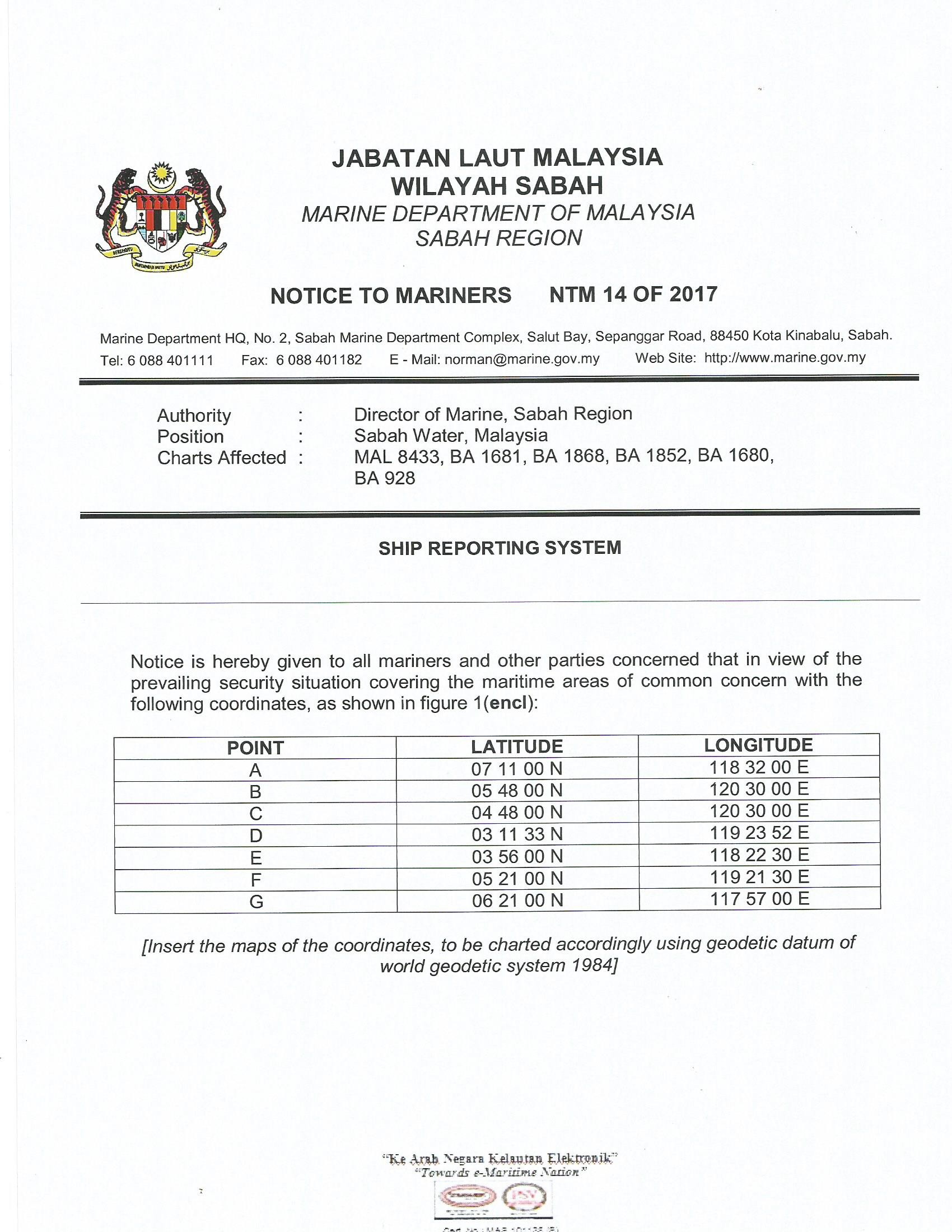
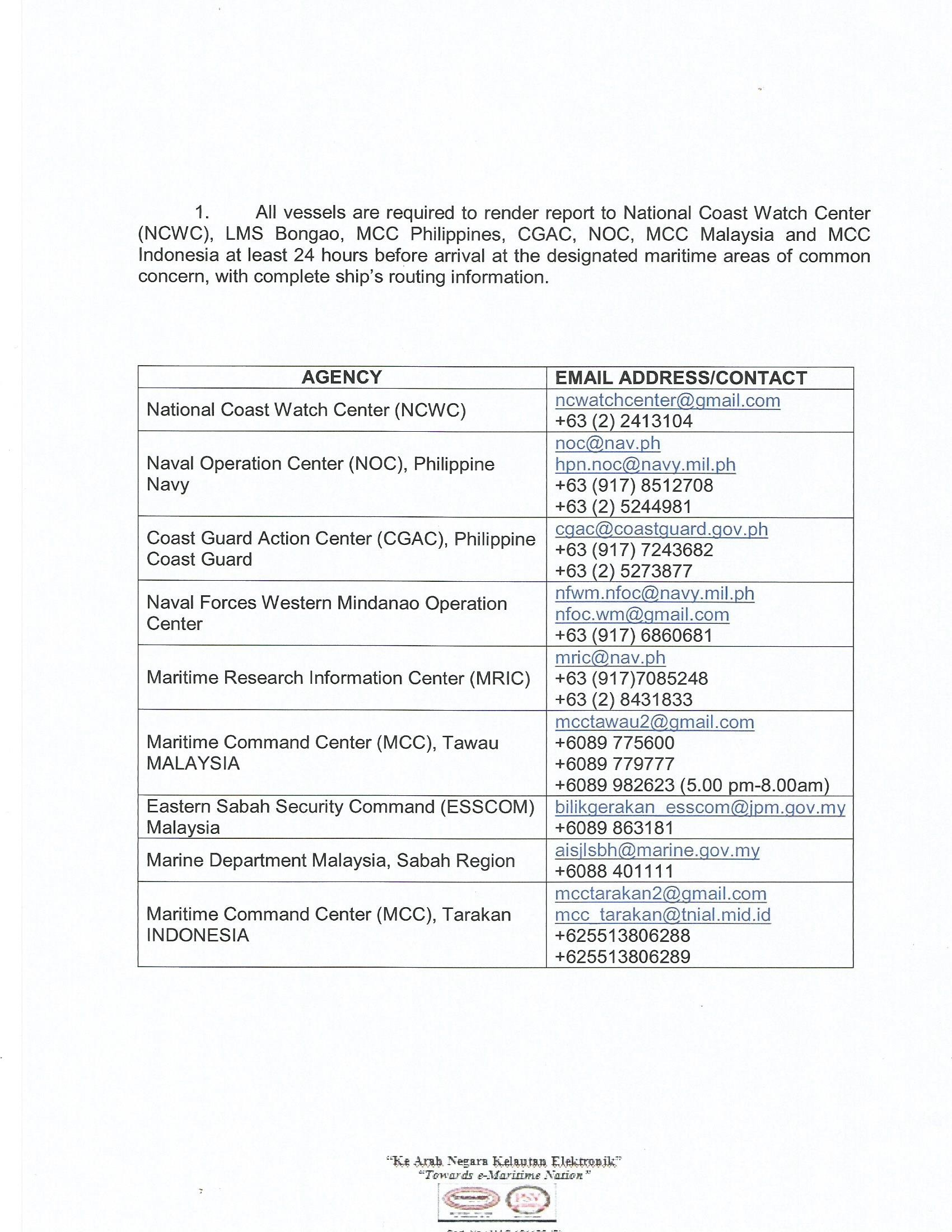
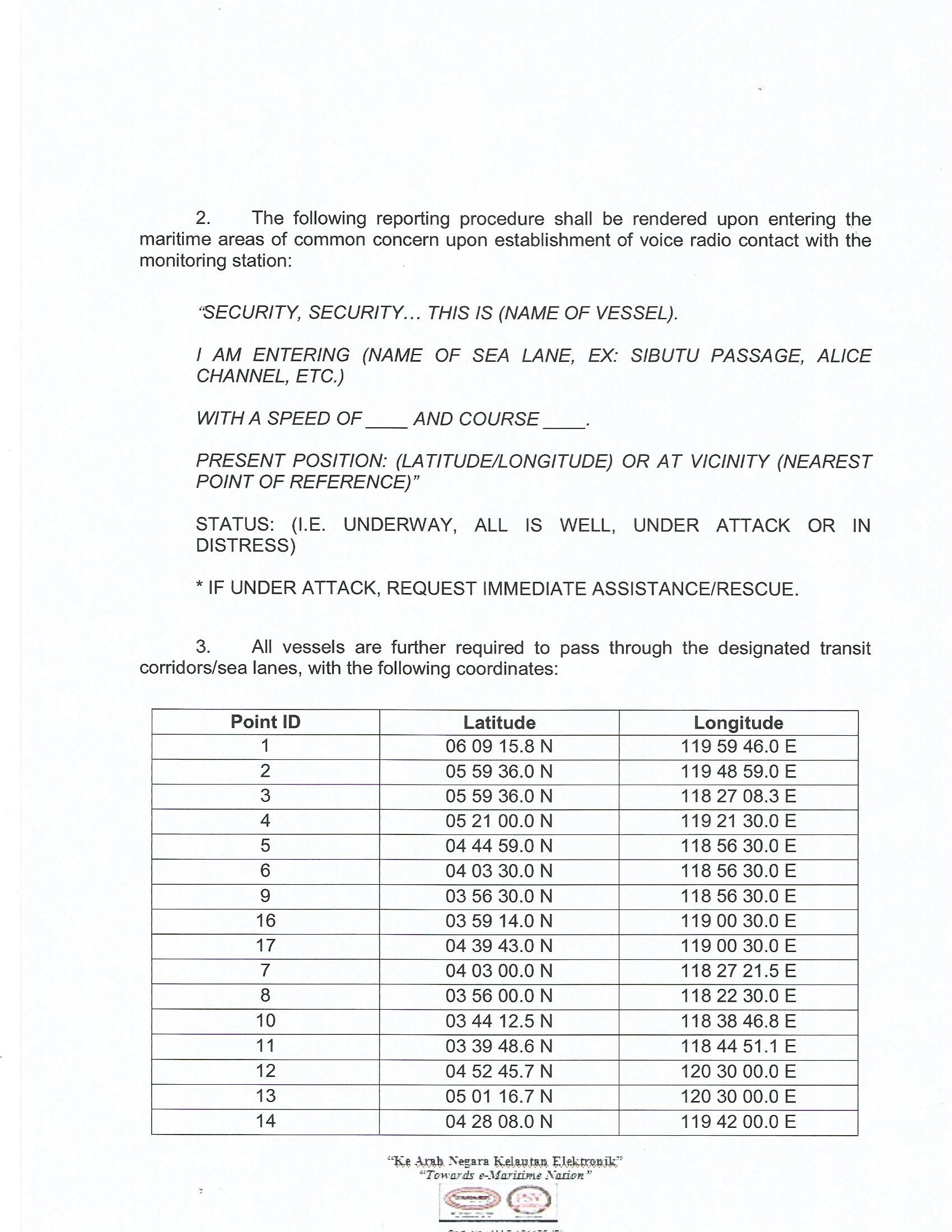
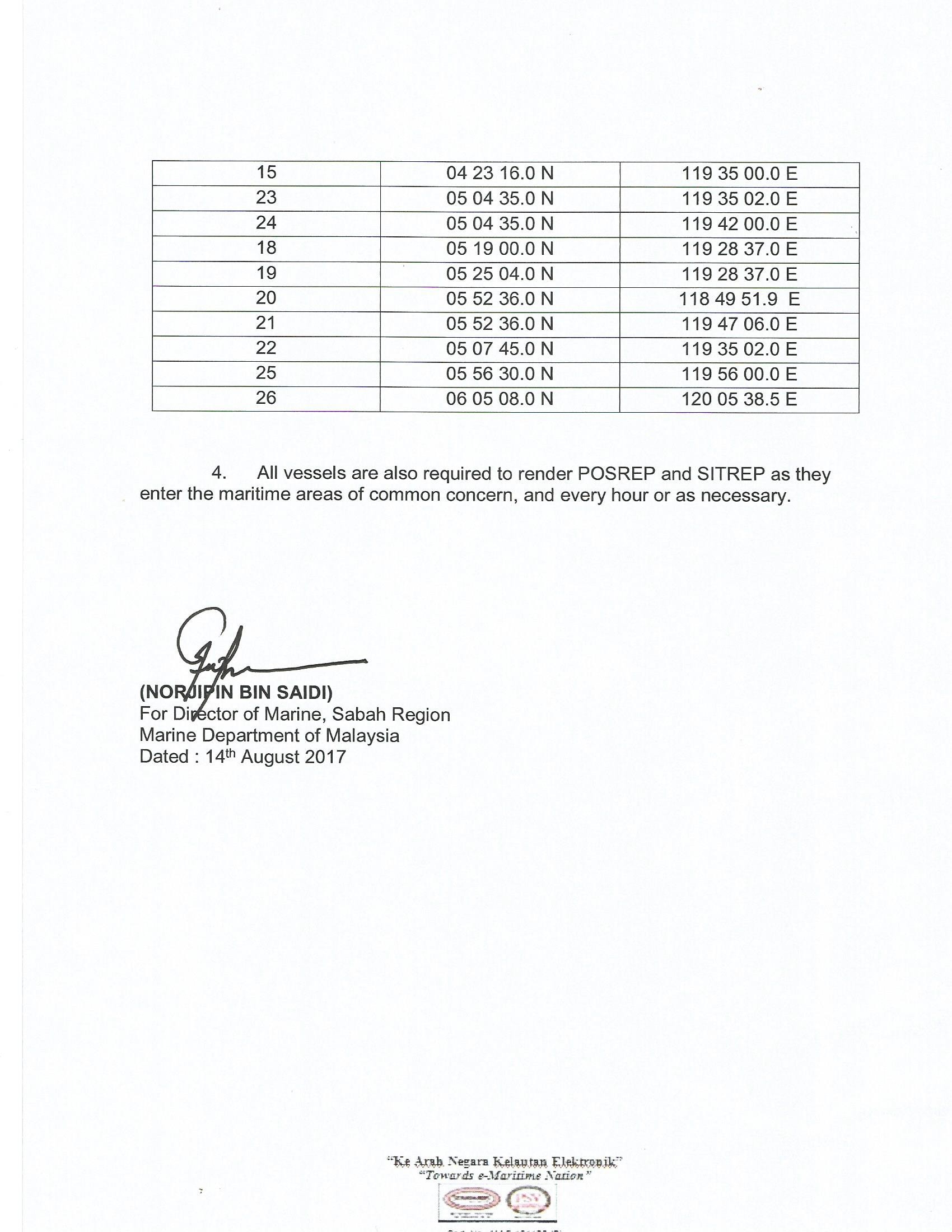
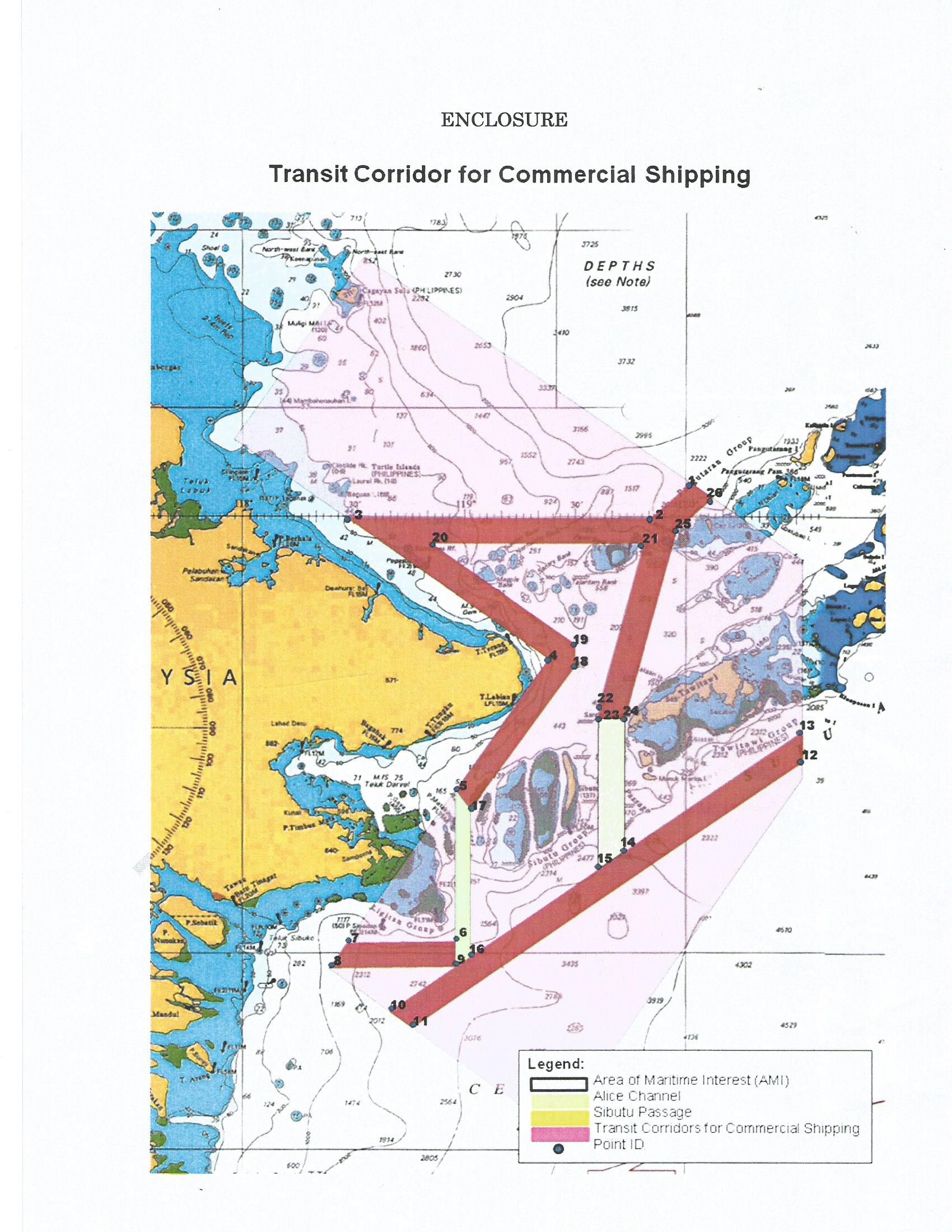
Vessels navigating in the Sabah Region (the area between Sulu and Celebes Seas in the triangle between the Philippines, Malaysia and Indonesia).
In addition to the above recommendations, vessels transiting the Sulu Archipelago and the Sibutu Passage should be guided by the Notice to Mariners, NTM 14 of 2017 as issued by the Marine Department of Malaysia, Sabah Region.
The NTM 14 of 2017 is attached.
For more information please contact the Security Department at telephone + 1 703 251 2405 email security@liscr.com; LISCR Duty Officer + 1 703 963 6216 / email: dutyofficer@liscr.com
* * * * *