
Marine Security Advisory: 03/2018 - Industry Releasable Threat Assessment (IRTA)
09 March 2018
Marine Security Advisory 03/2018
March 9, 2018
MARINE SECURITY ADVISORY: 03/2018
Subject: Industry Releasable Threat Assessment (IRTA)
Dear Shipowner/Operator/Master of Liberian flagged vessels
The attached IRTA was prepared by EU NAVFOR and Combined Maritime Forces (CMF) and takes into account information, knowledge and intelligence of the two multi-national naval operations. It is current as of 15 February 2018.
The IRTA presents the common understanding of the current threat actors in the Red Sea, Gulf of Aden (GoA), Gulf of Oman (GoO) and Western Indian Ocean, and offers the combined military perspective on assessed future maritime threats and trends. It is intended to inform risk management decision making for shipping operators responsible for merchant vessels that are transiting through these sea areas.
Year 2017 saw the greatest range and frequency of maritime activity since 2015, with incidents recorded in the GoA, Somali Basin and the Red Sea being attributed to the following:
- Somali based pirates
- Local Security Forces / ad hoc Militias
- Houthi aligned forces / other groups associated with the Yemen conflict
- Local fishing / Territorial Disputes
- Unknown Threat Groups.
The IRTA concludes that:
i. recent incidents serve to highlight that piracy is not eradicated; ii. piracy attacks will likely remain sporadic and at a low level,
- the best form of protection is to continue to implement BMP and the carriage of PAST (Private Armed Security Team), along with utilizing the Maritime Security Transit Corridor and registering with MSCHOA / UKMTO;
- timely and accurate reporting from shipping is vital to enable both the response to incident, and the development and maintenance of an understanding of the threat environment; and
- cooperation between military and maritime industry stakeholders remains pivotal to the success of Counter Piracy and the Maritime Security effort protecting the free flow of commerce.
Owners, operators, CSOs are requested to review the IRTA and provide a copy to their Masters.
For more information, please contact the Security Department at telephone + 1 703 251 2405 email security@liscr.com.
* * * * *
Industry Releasable Threat Assessment (IRTA)

Current as of 15 February 2018 (released 1 Mar 18)
This Threat Assessment has been released to the Maritime Community in confidence. It should not be disseminated further without permission.
Foreword
- This threat assessment has been written by EU NAVFOR and Combined Maritime Forces (CMF). It is intended to inform risk management decision making for shipping operators responsible for merchant vessels that are transiting through the Red Sea, Gulf of Aden (GoA), Gulf of Oman (GoO) and the Western Indian Ocean. The report also communicates the latest Piracy Threat Assessment to the Contact Group for Piracy off the Coast of Somalia (CGPCS).
- The threat assessment takes into account information, knowledge and intelligence from the two multi-national naval operations: EU NAVFOR and CMF. It presents the common understanding of the current threat actors in the Red Sea, GoA, GoO and Western Indian Ocean, and offers the combined military perspective on assessed future maritime threats and trends. It incorporates and replaces the information contained in the Industry Releasable Threat Bulletins (IRTBs) outlined below issued since the last IRTA publication 1 Dec 17. The information cut-off date for this IRTA is 15 Feb 18.
- IRTB 001 issued 7 Dec 17: possible naval mine drifted ashore in the Southern Red Sea (SRS)
- IRTB 002 issued 15 Dec 17: piracy linked attack on the MV EVER DYNAMIC and GALERNA III in the Somali Basin (SB)
- IRTB 003 issued 8 Jan 18: possible threat from explosive boats in the SRS.
Executive Summary
- The last year has seen the greatest range and frequency of maritime activity since 2015, with incidents recorded in the GoA, Somali Basin and the Red Sea being attributed to the following:
- Somali based pirates
- Local Security Forces / ad hoc Militias
- Houthi aligned forces / other groups associated with the Yemen conflict
- Local fishing / Territorial Disputes
- Unknown Threat Groups.
- 2017 saw the first successful pirate attacks in the Somali Basin and GoA since 2012. In addition to a number of unsuccessful pirate attacks there have been several other incidents assessed as linked to ad hoc militias or local disputes. The last pirate attack occurred in November 2017.
- Since the beginning of 2017, we have seen a number of attacks in the Bab-al-Mandeb (BaM) strait. These attacks, assessed to be specifically linked to the ongoing Yemen conflict, are those involving the Saudi Arabian frigate AL-MADINAH, MV SULTAN-2, mine-hunter UAE FRANKENTHAL and Landing Ship Tank UAE AL KHAZNAH. Similarly, the reported incident involving a suspected unmanned explosive boat (WBIED) on 06 Jan 18 is highly likely to be linked to the ongoing conflict in Yemen. It has not been possible to relate other incidents, despite having occurred in close proximity to the Yemeni coast (for example the MV ARABIAN SUN, para 28a), directly to the conflict.
- The attack on the Crude Tanker MV MUSKIE in May 2017 also serves as an important reminder of the potential for new and developing threats to merchant traffic transiting through this narrow and strategically vital trade route. In addition, there has been reporting indicating the use of naval mines by Houthi forces along the western coast of Yemen. The use of mines has thus far only been directed towards the Saudi coalition warships. Despite not being the intended target, events of this type may affect civilian vessels that are either using the ports or transiting close to the coastline. Within the Maritime Security Transit Corridor (MSTC), the threat from naval mines is low.
- Recent incidents and attacks on merchant ships in the BaM, Internationally Recommended Transit Corridor (IRTC) and the Somali Basin, coupled with instability in both Yemen and Somalia, highlights increasing maritime insecurity off the Horn of Africa. The political and security conditions in both these countries present considerable opportunities for criminal enterprises and could allow piracy to flourish should protective measures at sea reduce. Application of Best Management Practices (BMP) remains vital.
- Somalia continues to undergo major political change; such transformations are often accompanied by the risk of further instability. The consequence of any further deterioration in the rule of law would serve to exacerbate both the freedom and impunity of criminal networks in the regions. The cooperation of the Shipping Industry with Counter Piracy Naval Forces, in particular EU NAVFOR (including the Maritime Security Centre Horn of Africa - MSCHOA), CMF and UKMTO (United Kingdom Maritime Trade Operations) at the bridge to bridge information sharing level has been unprecedented over the last 8 years. It is vital this cooperation is sustained and that incidents of any nature that represent a threat to shipping in the High Risk Area (HRA) are reported in full compliance with BMP.
Situation in Somalia
- The election of Mohamed Abdullahi "FARMAJO" Mohamed as president of the Federal Government of Somalia (FGS) in early 2017 and the relatively smooth transition of power has raised hopes that Somalia can progress to the next stage of re-establishing both functioning political institutions and a security apparatus, in conjunction with the federal and regional leadership. This is a vital step in the long term development of acceptable, affordable, accountable and capable Somali security forces, who in time will assume full security responsibility for both land and territorial sea domains.
- At times, however, the centralist approach adopted by FARMAJO and his administration during his 12 months in office has resulted in an increase in tensions between the Federal Member States (FMS) and the FGS. Seeking to address the situation in early 2018, FARMAJO has attempted to improve relations with the FMS and establish relationships with their leaders.
As a result, he embarked upon a ‘peace tour’ of Puntland and Galmudug in January 2018. The successful outcome of this (or otherwise) is yet to be understood. This positive step was quickly undermined by the unexplained arrest of leaders and MPs from the opposition parties, the dismissal of the Ministers of Interior and Federal Affairs, and the dismissal of the Mayor of Mogadishu, in recent months which has fuelled criticism of the FGS and FARMAJO.
- The security situation across Somalia remains unstable. Al Shabaab (AS) maintains freedom of manoeuvre in large parts of southern and central Somalia and a footprint in Puntland, close to Bosasso. Despite this, on 18 Jan 18 the administration in Galmudug signed an agreement with AHLU SUNNA WALI JAMAA (ASWJ – a paramilitary group based in the Western areas of Galmudug which gained prominence in 2008 for its anti-AS stance) in an attempt to bring some stability to the region and counter AS influence. In Puntland, the security situation remains tense with its President, Abdiweli Ali GAAS facing increasing pressure from various clan factions. Clans and its sub-structures maintain in control of rural areas, hampering the outreach of the regional administration. Tensions with Somaliland over disputed areas (Sool/Sanaag/Cayr) are adding to the instability.
- This complex security condition creates significant opportunities for criminal enterprises to operate on land and at sea. Although piracy is the most commonly known threat, there are a number of other maritime crimes taking place in the area. Criminal groups previously involved in piracy are considered highly likely to have switched to other lower risk criminal activities to meet their financial objectives. The reach and capability of maritime law enforcement agencies such as the Mogadishu based Maritime Police Unit (MPU), the Somaliland Coast Guard (SCG), the Bosasso Port Maritime Police Unit (PMPU), the Puntland Maritime Police Force (PMPF) and the Galmudug Coast Guard (GCG) varies significantly and is limited to protecting port facilities and to conducting maritime operations in their immediate littoral areas. Notwithstanding this factor, the PMPF continues to use Forward Operating Bases (FOBs) along the coast of Puntland (from Bosasso to Garacad) to both maintain a broader maritime security presence (albeit a limited one) and allow them to dynamically relocate resources as and when required.
Situation in Yemen
- The conflict in Yemen is ongoing. The Saudi-led coalition (SLC) imposed restrictions on Yemeni ports in response to a missile fired by Houthis towards Riyadh in November 2017. These restrictions have been eased since December 2017, but the SLC continues to monitor closely maritime traffic in the area. Since that time loyalist forces backed by SLC forces continue to make gains over Houthi forces along the west coast of Yemen: they have secured the previously Houthi held port of Mocha and continue their advance towards the port of Hodeida. Although Houthi militants threatened (early 2018) to block maritime traffic in the SRS if the strategical port of Hodeida was threatened, to date there has been no extension or escalation of the threat in the maritime domain. SLC military vessels remain the primary target for attacks: it is considered unlikely that merchant vessels would be deliberately targeted. However, there continues to be a risk of collateral damage / misidentification.
- The lack of security in Yemen has also enabled kinetic operations by both Al Qaeda in the Arabian Peninsula (AQAP) and IS who are competing for power and influence.
Recent Activity
Piracy:
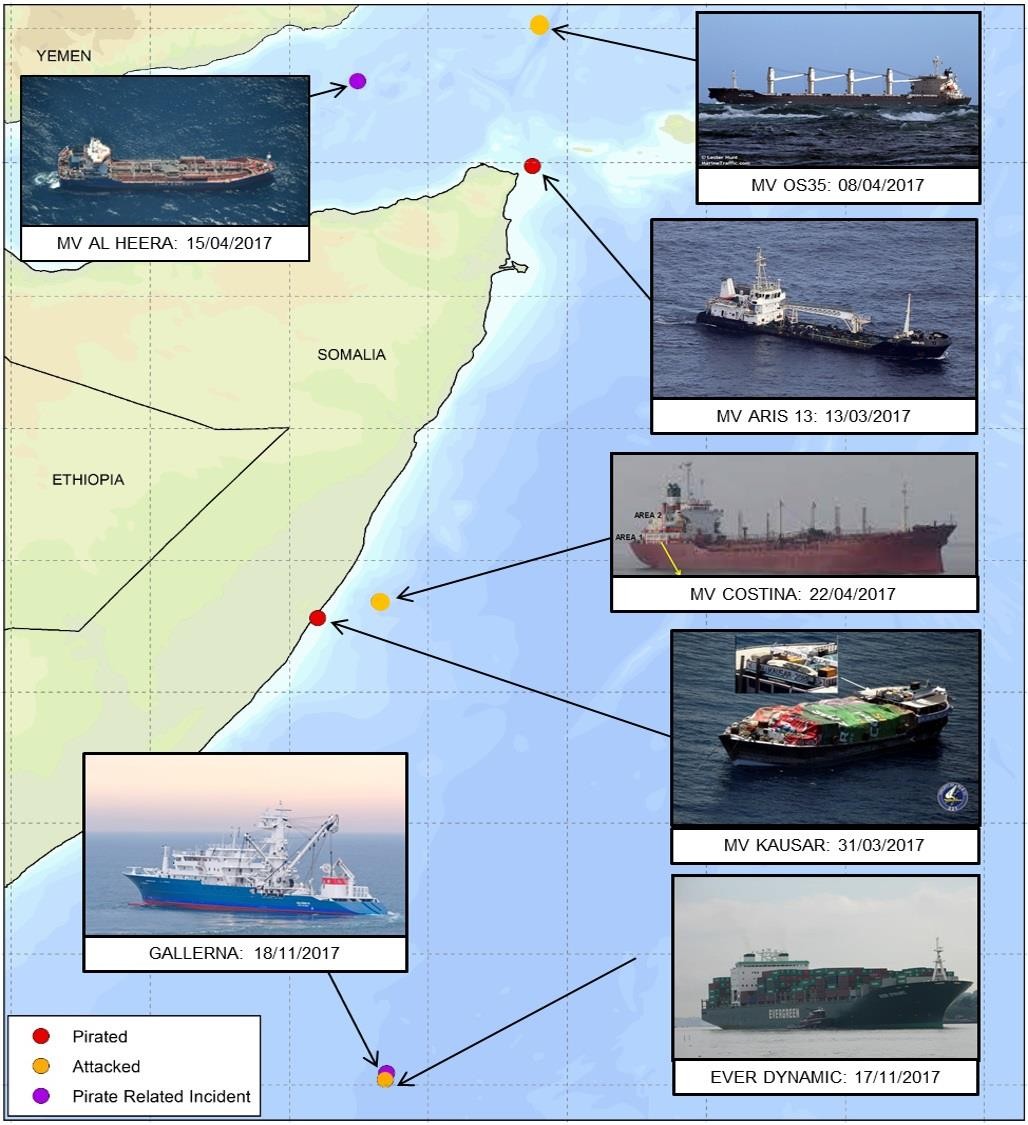
- The period between March and May 2017 saw a spike in piracy related activity. This is assessed as likely to have been caused by the perception of a permissive environment, resulting in part from the publicly-announced end of NATO’s Operation OCEAN SHIELD, a reduction in adherence to BMP and use of PAST (Private Armed Security Team), and the permissive weather conditions.
- Two incidents to highlight during this period are the MV ARIS-13 and the MV KAUSAR:
- The MV ARIS-13 is a gasoline tanker that had eight Sri Lankan crew on board. The MV ARIS-13 was transiting very close to the shore of Somalia without visible BMP measures or PAST on board, and was successfully pirated on 13 Mar 17. It did not register with MSCHOA before leaving DJIBOUTI and its low speed (6knt at the time of the incident) and low freeboard made it a vulnerable target for pirates. On the 15 Mar 17 the PMPF cordoned the vessel and had a fire-fight with a suspected resupply vessel. This action, along with pressure from clan elders, resulted in the pirates abandoning the ship.
- The dhow MV KAUSAR was pirated on the 31 Mar 17 and its 10 crew were taken hostage. The vessel had no visible BMP measures or PAST, and had been transiting at a slow speed of 4/5 knots. The event was resolved through a gradual de-escalation due to pressure from local clan elders and the Galmudug Coastguard (GCG).
- The key event in the period was the boarding of the MV OS-35, a Lebanese owned international bulk carrier, in the Eastern approach to the IRTC. This attack would not have looked out of place in 2012 and was a stereotypical pirate attack. Three pirates successfully boarded the vessel and the crew secured themselves in the citadel. Imagery analysis indicates that the pirates likely tried (unsuccessfully) to burn the crew out of the citadel. In this instance there was an international response from the EU NAVFOR vessel ITS ESPERO, a Chinese and an Indian Naval ship. The incident was ultimately resolved when a Chinese military boarding team boarded the vessel and detained the three pirates.
- The MV OS-35 was followed by two unsuccessful attacks on tankers MV AL-HEERA and MV COSTINA, which were thwarted following an engagement by the embarked PAST team and the arrival of the EU NAVFOR Flag Ship respectively.
- Another unsuccessful attack occurred on the MV EVER DYNAMIC approximately 300nm off the coast of southern Somalia. Less than 24 hours later, 88nm from this position, an incident involving the FV GALERNA III occurred. This was reported in IRTB 002 issued on 15 Dec 17 (as a result these two incidents are reported here together):
- 17 Nov 17; MV EVER DYNAMIC reported that she was under attack from a skiff. Five persons and a ladder were observed as the skiff came alongside and attempted to board.
The initial approach was unsuccessful as the pirates’ ladder was too short; however they came very close to successfully boarding. The skiff then moved to the stern of the ship and the pirates attempted a second boarding which was thwarted by the ship’s effective Best Management Practice (BMP) measures. Subsequently the skiff moved away from the ship and fired two RPGs (Rocket Propelled Grenade), one at the stern and one at the bridge, both of which missed their target. It was likely a final attempt to slow the ship. As the MV EVER DYNAMIC gradually increased speed to 20 knots the skiff could not keep up and subsequently withdrew towards a larger whaler that was approximately 1nm away, which is believed to have been operating as a mother ship.
- 18 Nov 17; FV GALERNA III reported a suspicious approach by a skiff. The skiff closed to within a distance of approximately 300m and did not move away until warning shots were fired by the embarked Private Armed Security Team (PAST). The skiff moved towards a whaler which was loitering approximately 7nm away.
- Both incidents were ultimately unsuccessful and both the vessels and the crew were left unharmed.
- Following the incidents EU NAVFOR’s Flagship, the Italian vessel ITS VIRGINIO FASAN located the whaler and skiff in conjunction with Maritime Patrol Reconnaissance Aircraft (MPRA) assets. Having located the craft the FASAN tracked the suspected pirates overnight 18/19 Nov 17. Imagery taken by both the MPRA and the FASAN’s organic helicopter was shared with the masters of the EVER DYNAMIC and GALERNA III who confirmed that it appeared to be the same craft that were involved in the respective attacks. As a result a team from the FASAN conducted a boarding on the morning of 19 Nov 17, detaining six suspected pirates and seizing the skiff and whaler. The six suspected pirates were transferred to the authorities in Seychelles for prosecution, which is still ongoing at the time of this report.
- The MV EVER DYNAMIC attack took place 300nm from the Somali coast, which represents the first identified long range pirate activity group (PAG) operating amongst trans Indian Ocean shipping traffic in the Somali Basin. This marks a change in tactics from the spike of piracy activity in March and April 17 when attacks took place much closer to the Somali coast. The importance of adherence to BMP proved to be critical, in particular vigilance and the reporting of all suspicious incidents to UKMTO at the time they are observed cannot be over emphasised.
- In this instance, the imagery captured by both the MV EVER DYNAMIC and the FV GALERNA III played a crucial part in linking the suspected pirates and craft to both incidents and is therefore likely to be pivotal in any subsequent legal process. We therefore suggest that during such incidents, when feasible and without endangering the vessel or her crew, imagery is taken of those involved and provided to MSCHOA.
Activity in the BaM and Southern Red Sea

Unknown Threat Group

Houthi Forces

Mine

25/10/2016
25/10/2016
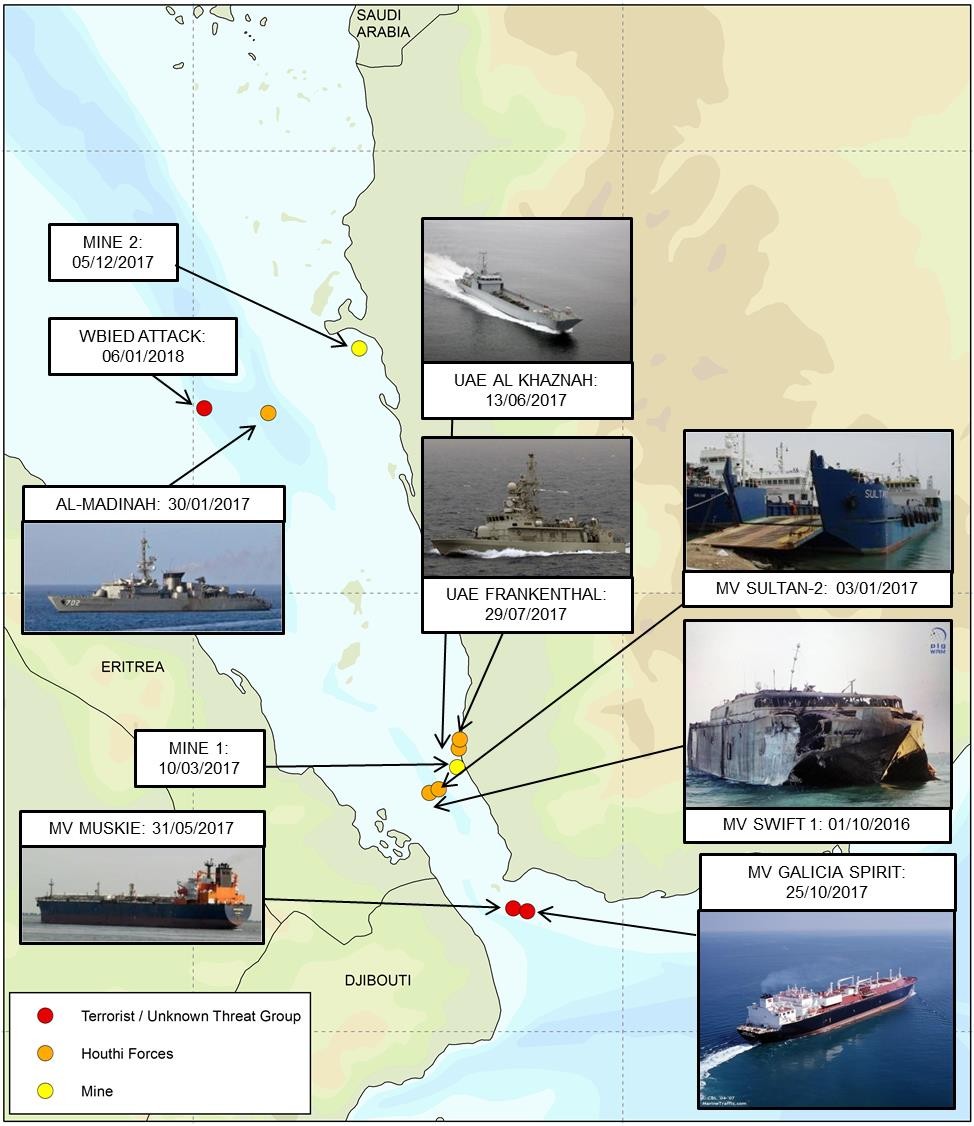
- The first half of 2017 witnessed an increase in attacks in the BaM and Southern Red Sea:
- AL-MADINAH, a Saudi Arabian frigate, was attacked on 30 Jan 17 by an unmanned, guided, water-borne improvised explosive device (WBIED) which clipped the stern of the ship and was subsequently claimed by the Houthi forces. This was the same in concept as the attack on the MV SWIFT on 1 Oct 16. The MV SWIFT was struck by an anti-ship missile whilst providing logistical support to the Saudi led coalition and had been transiting established and predictable patterns making her vulnerable to attack.
- The MV SULTAN-2 was a military style landing craft that was contracted to the Saudi-led coalition. The ship was engaged by small arms / machine gun fire on the 3 Jan 17 and written off as a result.
- 13 Jun 17 Houthi forces successfully attacked a UAE vessel with a missile as it departed from Al Mukha port off the west coast of Yemen.
- 29 Jul 17 an explosive boat attack took place in the vicinity of Al Mukha port. The explosive boat reportedly impacted close to several ships and the UAE mine hunter FRANKENTHAL suffered significant damage.
- In two separate incidents occurring on the morning of 6 Jan 18 in Southern Red Sea, approximately 45 nm off the port of Hodeida, Yemen, speed boats were reported as approaching merchant vessels. These incidents were reported in IRTB 003 issued 8 Jan 18. It is assessed as likely that the speed boats in both incidents were the same. In the second incident, one of the speed boats was reported to be unmanned.
- First incident: 060745 (UTC) Jan 18. Two speed boats with 5-7 POB were observed approaching a northbound merchant vessel. The approach vector was from the starboard quarter. The merchant vessel increased to maximum speed and after 4-5 minutes the speed boats broke away in the direction of another merchantman. This second merchant vessel was warned by the first (via VHF) and she too came up in speed to evade. After a few minutes the speed boats stopped following.
- Second incident: 060910 (UTC) Jan 18. Three speed boats were observed by a merchant vessel at a distance of 4nm. Subsequent reporting indicates that two of the speed boats were manned and one was unmanned (assessed to be carrying explosives). The persons on the manned speed boats were reported to be armed and carrying camera equipment.
- The speed boats were intercepted by a warship belonging to the Saudi-led coalition operating near the merchant vessel. An exchange of gunfire was reported resulting in the unmanned vessel being neutralised. The two manned speed boats left the area.
- It is assessed that these incidents are highly likely related to the ongoing conflict in Yemen. It is still unclear whether the target was the merchant vessel or the Saudi-led coalition warship. It is considered unlikely that merchant vessels would be deliberately targeted, however there continues to be a risk of collateral damage / misidentification.
- The requirement for vigilance when transiting this area, together with the timely reporting of all suspicious incidents, remains crucial. It is requested that during an incident, when feasible and without endangering the vessel or her crew, imagery is taken of those involved and provided to MSCHOA. A detailed description of vessels, objects, and behaviours observed are vital contributors to the analysis and assessment of the threat environment.
- Possible threat from mines in the Southern Red Sea:
- 5 Dec 17 a possible naval mine drifted ashore and was discovered in the vicinity of Ras Issa Peninsula (around 25nm north of Hodeida) and reported in IRTB 001 issued 7 Dec 17. Noting that the position of the possible mine is on the eastern side of the Red Sea, as was the incident involving a Yemeni Coastguard vessel reportedly impacting a mine on 10 Mar 17 in the vicinity of Mocha-a-Yemeni, transiting to the western side of the Hanish Islands north or south bound (in accordance with the MSTC) is still recommended.
- We assess that the use of mines is specifically targeted towards the Saudi coalition and intended to reduce their access to key ports. Despite not being the intended target this may have an effect on civilian vessels that are either using the ports or transiting close to the coastline, as despite efforts to remove them it is highly likely that mines remain present in these areas. Analysis of the quality of the mines indicates that they are likely of a low quality. They are unlikely to drift into international shipping channels as they are more likely to take on water and sink in situ. We strongly recommend all maritime shipping utilises the MSTC when transiting through the area in order to minimise the threat from naval mines. We assess that within the MSTC the threat from naval mines remains low.
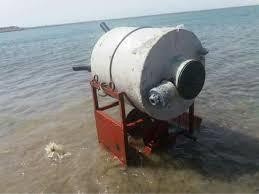
Naval mine recovered off the coast of Yemen
(As shown as “Mine 1” on graphic)
- In early January 2018 the Houthi forces have threatened to close the BaM, should the Saudi coalition capture the port of Hodeida in the Southern Red Sea. To date, there is no evidence of this activity being progressed. It is assessed that the deliberate targeting of international merchant vessels by the Houthi forces is unlikely.
- The attack on the MV MUSKIE 31 May 17, much like the MV GALICIA SPIRIT 25 Oct 16, is assessed as not linked to either the Yemen conflict or piracy. During both incidents there was an explosion that took place. In the case of the MV MUSKIE the explosion occurred a small distance away from the ship, assessed to likely be the result of a technical malfunction. On the MV GALICIA SPIRIT the explosion occurred alongside the ship, possibly whilst attempting to move the explosives. The explosives in both instances were assessed to be in the region of 50 / 70kgs. In both instances no group has claimed responsibility, possibly due to the lack of success in the operation. This is a significant departure from both the Houthi and pirate tactics we have seen and suggests the involvement of another threat group, possibly a terrorist group and if so likely to be AQAP. We assess that the lack of success in both instances may have dissuaded future attacks of this kind.
Local disputes
- Focussing on the current inter-monsoon period there have been four incidents since September 2017 assessed to be linked to local disputes or local coastguard activity:
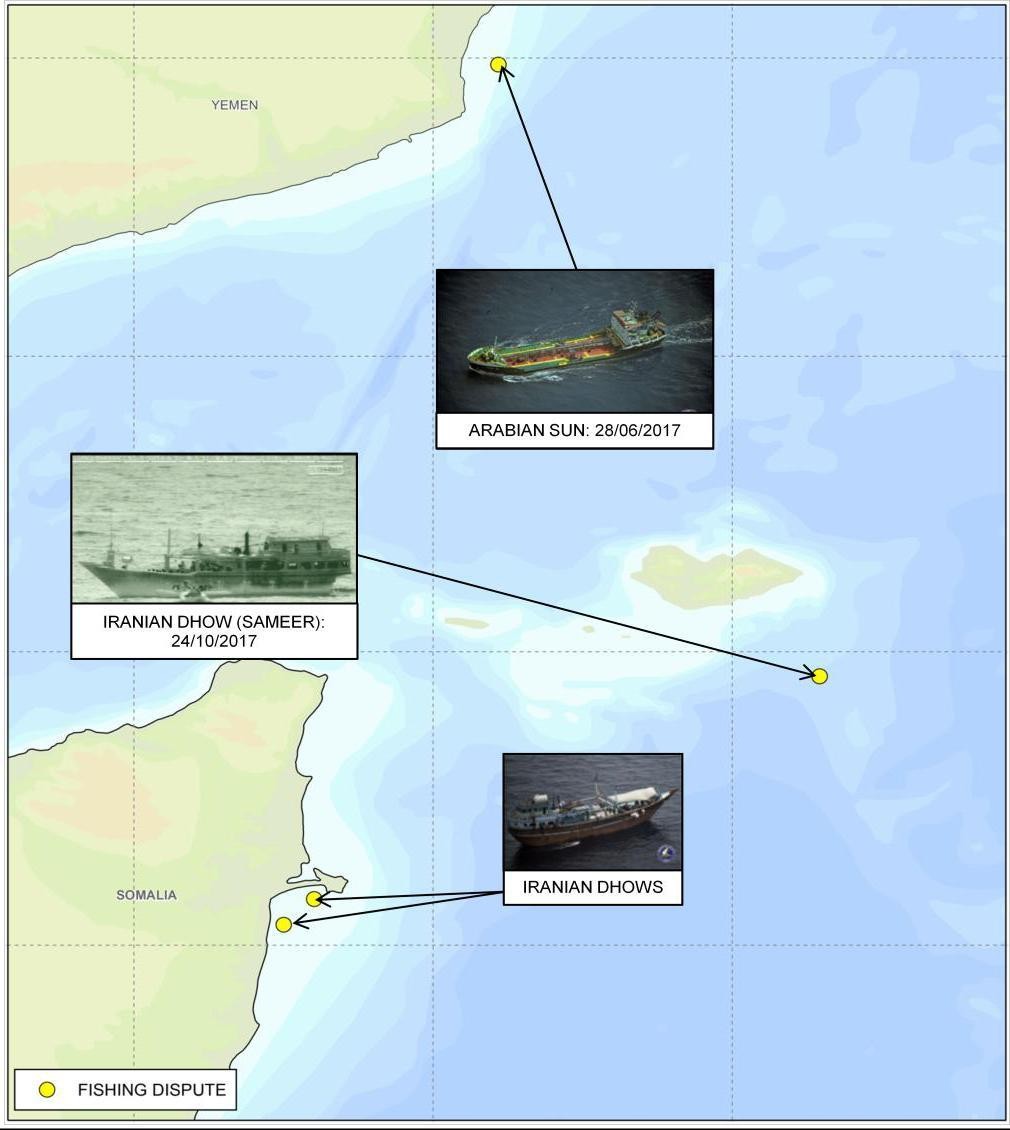

LOCAL DISPUTE
- 28 Sep 17 the MV ARABIAN SUN reported being attacked near Nishtun on the Yemeni coast. She reported that a dhow approached and a uniformed individual on board requested that the MV stop; when the MV ARABIAN SUN refused to comply, personnel on the dhow opened fire for approximately an hour. On the basis of the presence of a uniformed individual and the close proximity to the Yemeni coast we assess that this is likely linked to a local coastguard group or ad hoc militia. This incident is highly unlikely to be piracy related.
- 8 Oct 17 open source news outlets reported that the PMPF had interdicted two dhows that were reportedly conducting illegal fishing off the coast of Puntland. Whilst one of the dhows escaped, the Captain of the second dhow was killed during the incident. Another crew member was injured and the remaining 16 were detained by the PMPF.
- An Iranian fishing dhow (referred to as Sameer, which is a colloquial term used to refer to FVs in Iran and literally means ‘breeze’) with 18 crew on board (10 Pakistani and 8 Iranian) reported being fired on in the early hours of the morning on 24 Oct 17. This took place 40nm south of Socotra and reportedly involved two skiffs with 8 personnel armed with AK47 type assault rifles on each. The FV also reported the presence of a bow-mounted machine gun on one of the skiffs. The FV reportedly took one fatality, four wounded crew members and sustained substantial structural damage. USS HOWARD subsequently conducted an inspection of the FV and gave treatment to four non-life threatening injuries and fixed a number of small holes in the ship’s hull. One fatality was confirmed.
- Whilst the exact nature of these incidents is not fully corroborated it is clear that certainly in the case of the MV ARABIAN SUN and the Iranian FV (Sameer) an incident took place and that rounds were fired at the vessels. We assess these incidents are highly unlikely linked to piracy and may represent a growing trend of local disputes or action by local coastguards / ad hoc militias. We assess it is highly unlikely that the international shipping community would be deliberately targeted by such groups, however, it may be noted that there is a risk of becoming involved in an incident in the vicinity of Socotra and when transiting close to both the Somali and Yemeni coasts.
Other Maritime Crime
30. The political and security instability across the region presents an abundance of opportunity to exploit other forms of maritime crime aside from piracy. It is highly likely that smuggling (narcotics, arms, charcoal and people) will continue. Thus, the shipping community is encouraged to continue to report incidents of suspected maritime crime in order to assist military partners (EU NAVFOR and CMF) in developing our joint understanding of what is an increasingly complex maritime security environment.
Projected Trends
Piracy
- EU NAVFOR and CMF assess that there are a number of factors that are affecting the current piracy activity in the region:
- Availability of other income generating opportunities: it is highly likely that success in other enterprises such as human trafficking and smuggling has enabled financial objectives to be met with minimal risk when compared to piracy.
- Reduction in tolerance and freedoms granted by local populations / clan elders / local security forces: it is likely that a lack of popular support and a growth in indigenous security capability has reduced the pirates’ ability to operate. This was highlighted in the case of the MV KAUSAR and the MV ARIS-13 in particular.
- Reduction in appetite and desire amongst pirate networks: it is highly likely that lower risk opportunities in other criminal enterprises have driven down the appetite and desire to conduct piracy. The high risk of piracy is not worth the reduced chance of success. The role of BMP and PAST is significant in reducing the pirates will to conduct piracy.
- Weather: as is commonly understood the weather plays a key role in determining the viability of piracy as the ability of small boats to operate varies throughout the year. However, it is worth emphasizing that prevalence of the factors listed above has reduced the significance of permissive weather conditions; an improvement in weather conditions in isolation is unlikely to result in an increase in pirate activity.
- Since the attack on MV EVER DYNAMIC, no further pirate activity has been witnessed that would indicate that this event represents an active PAG or a new spike in activity. The successful apprehension and handing over of suspected pirates to the Seychelles authorities for prosecution will likely have a deterrence effect on would-be pirates. As a result it is assessed that this event does not alter the overall trend for the area and that piracy attacks will likely remain sporadic and at a low level. However, these events clearly indicate that the threat of piracy is still present and such incidents must be taken into account during security risk assessment while transiting through the Somali Basin.
Attacks linked to the Yemen Conflict
33. EU NAVFOR and CMF assess that the ongoing conflict in Yemen, given its unpredictability, will continue to spill over in the maritime domain in the future. However it is still assessed that Saudi-led-coalition military vessels will remain the primary target for attacks: it is considered unlikely that merchant vessels will be deliberately targeted. Notwithstanding this, there will continue to be a risk of collateral damage / misidentification.
Other Threat Groups
- Due to its geographical position and the strategic importance of the region (politically, militarily and economically), the area will continue to be susceptible to the activities of multiple internal and external actors. Pressures on regional states will continue to affect their ability and willingness to police this threat.
- Maritime Security incidents in the maritime domain, by various threat groups, are likely to continue in the coming months, although the maritime shipping industry will likely not be the intended target.
MSCHOA Analysis
- MSCHOA’s activities since the last IRTA (released 1 Dec 17) have been focused on enhancing maritime domain awareness, designed to assist mariners in the event of an incident by improving the speed of passage of information and any resulting military response.
- MSCHOA have responded to a number of incidents in this period. The attack on the MV EVER DYNAMIC in Nov 17 took place 300nm south east of Mogadishu. The use of MERCURY enabled UKMTO to quickly share the details and descriptions of the attacking skiffs. Immediately after the attack on the MV EVER DYNAMIC a determined approach was reported by the FV GALLERNA III, which was again reported on MERCURY. The prompt and detailed reporting, and crucially the imagery captured by both vessels facilitated the military response and subsequent detention and handover of 6 suspected pirates to the authorities in the Seychelles. We emphasise the importance of the imagery captured by both vessels to the legal proceedings. Where possible, and without risking the safety of a vessel or her crew, we request that imagery is taken during an incident in as much detail as is possible.
MSCHOA Vessel Movement Registrations and PAST
- Registration with MSCHOA ensures that your vessel will be monitored by military forces during a transit of the HRA. In addition regular threat assessment updates, warnings and self-protection information are made available to shipping companies that register with
MSCHOA.
- Recognising the increasing administrative burden on Company Security Officers (CSOs), MSCHOA’s intention to release an updated version of the vessel movement registration will now be made available on line by April 2018. Please check the MSCHOA website
(www.MSCHOA.org). The new form will reduce the time it takes to register a vessel and provide more efficient access to the valuable information that is available to all CSOs.
- Statistics held by MSCHOA indicate that the carriage of PAST / PCASP (Privately Contracted Armed Security Personnel) has not altered since the last report and remains in the range of 25-30 % of all registered vessels.
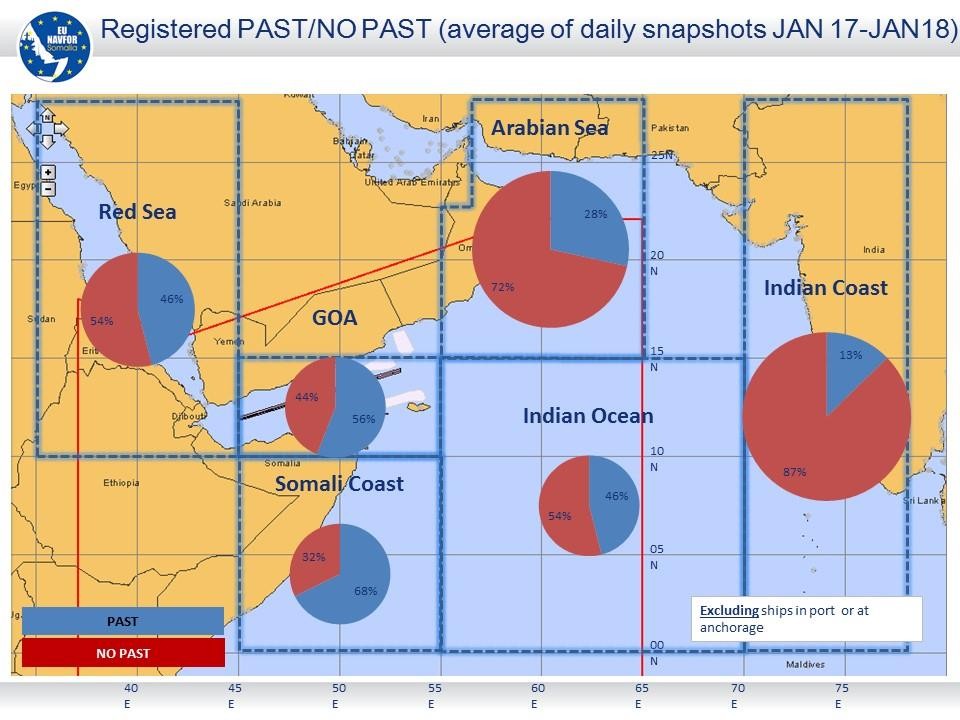
IRTC Escorts
41. Warships from the Navies of China, India, Japan, South Korea and Russia contribute to daily westbound and eastbound escorts along the IRTC. The schedules, along with associated information, are available from the MSCHOA website (www.MSCHOA.org) and are updated daily.
Maritime Security Transit Corridor (MSTC)
- Recent attacks against merchant shipping in the GoA and BaM have highlighted the risks associated with transiting these waters. The multiple types of risks and the broad expanse of ocean on which these attacks can occur dictate that Naval Forces must be used in the most efficient manner possible. To assist in this, CMF has established the Maritime Security Transit Corridor (MSTC).
- The MSTC consists of:
- The Internationally Recommended Transit Corridor (IRTC).
- The BaM Traffic Separation Scheme (TSS) and the TSS West of the Hanish Islands.
- A two-way route directly connecting the IRTC and the BAM TSS.
- The purpose of this corridor is to provide a recommended merchant traffic route around which Naval Forces can focus their presence and surveillance efforts. It is recommended that all vessels use the MSTC to benefit from military presence and surveillance.
- The formation of the MSTC has no effect on the use or timings of either group transits or warship escorted transits of the IRTC. These will continue to be scheduled and executed as they have in the past. The IRTC end points will remain extant.
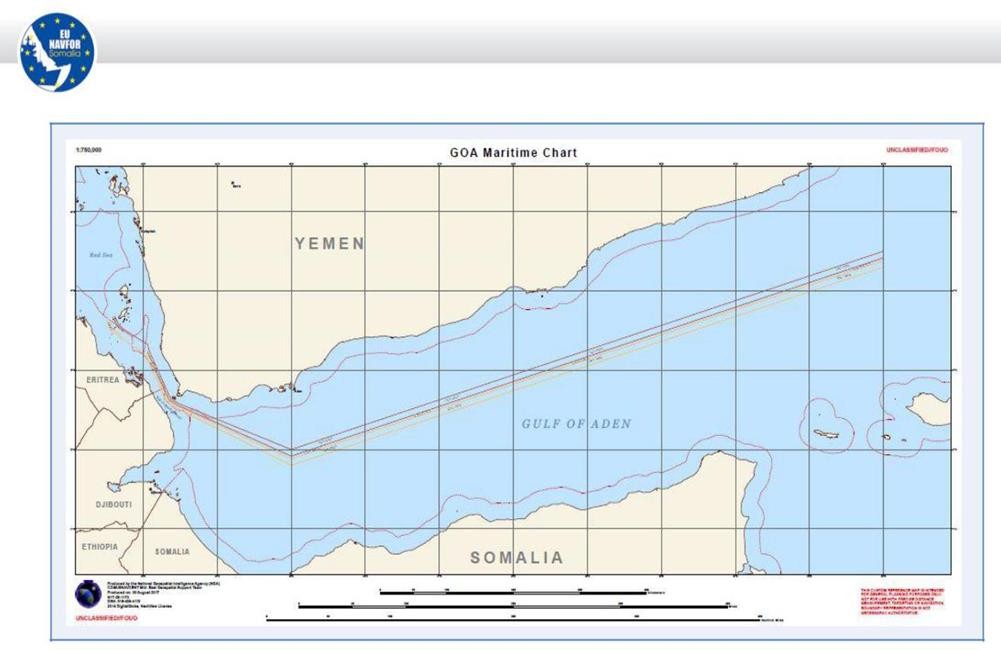

Maritime Security Transit Corridor (MSTC)
Routing
- MSTC. It is strongly recommended that ships navigate within the MSTC where naval / military forces are concentrated. The quick military response in assisting the release of the MV OS-35 was due to the location of the military forces patrolling the IRTC.
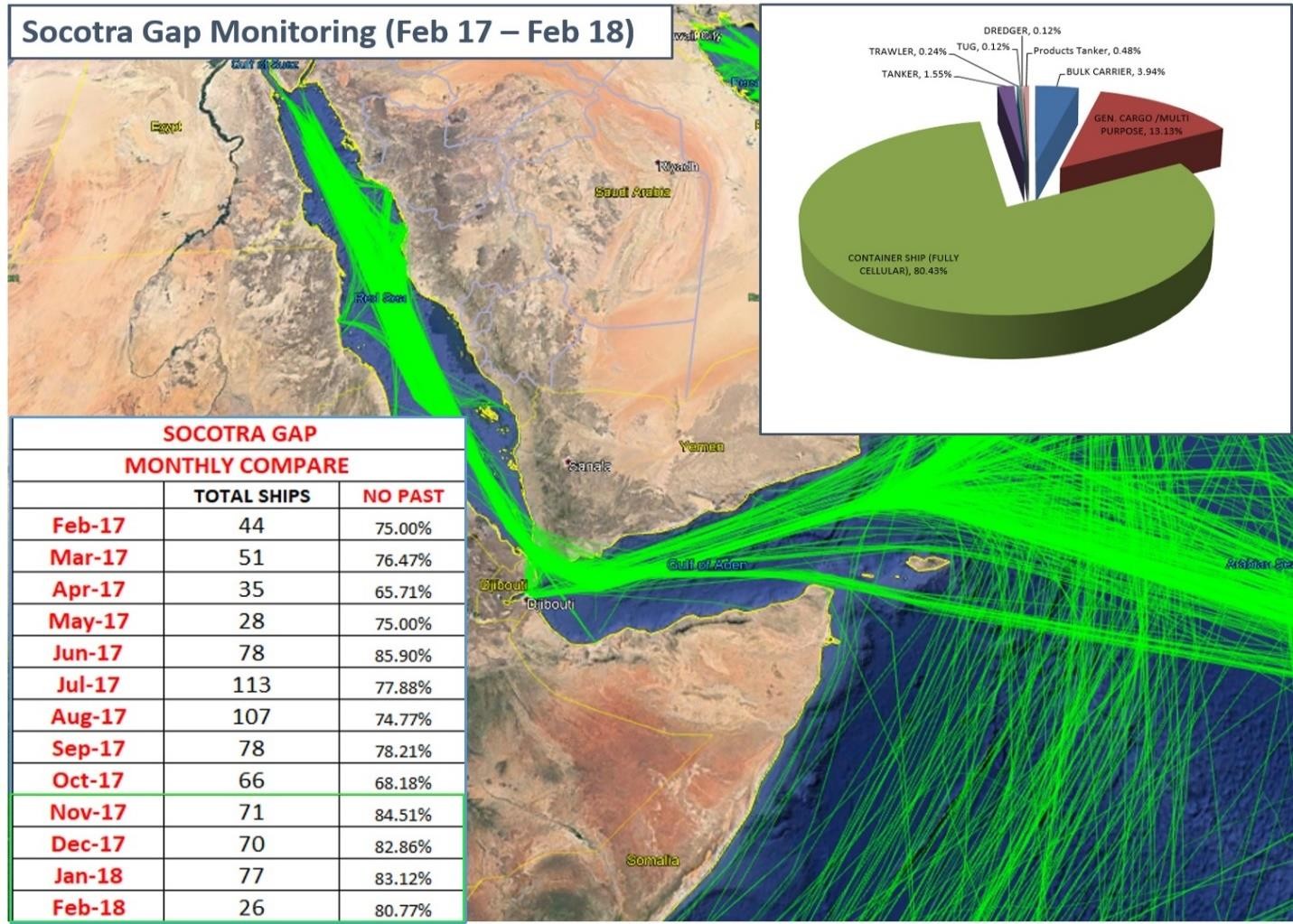
- Socotra Gap. Shipping transiting through the ‘Socotra Gap’ has continued despite the significant risk of a piracy attack in this area. This route is not recommended and vessels should consider following the MSTC to its conclusion.
- Military forces occasionally conduct Focused Operations in areas such as the Socotra Gap in order to enhance their maritime domain awareness. Gaining this understanding enables the military forces to provide relevant, accurate and timely advice to the mariners. Recent CMF Focused Operations supported by EUNAVFOR have monitored merchant vessel activity in the Socotra Gap. Data was gathered visually by warships, digitally via satellite AIS (Automatic Identification System) and by the monitoring tools of MSCHOA. The results shown in the figure below highlight a consistent flow of traffic though this area, which is contrary to the routing recommendations in BMP4. However, military forces do not routinely patrol in the Socotra Gap and vessels are strongly recommended to navigate within the MSTC.
- Bab-al-Mandeb. As part of MSCHOA’s safeguarding and monitoring of all vessels in the HRA, MSCHOA has observed a small, but not insignificant (5% of all traffic), number of vessels heading for the Suez Canal that still use the TSS east of the Hanish Islands. In accordance with CMF guidance published in Aug 2017 merchant vessels are recommended to use the TSS west of the Hanish Islands.
Summary of CMF Activity
50. CMF has been actively promoting the adoption of a more holistic “maritime security mindset”, which considers the enduring threat from piracy, but also the dynamic underlying set of threats in the SRS, BaM and West GoA. CMF and EUNAVFOR are working closely to provide reassurance to the shipping community against this full range of threats. The MSTC, which CMF introduced in late 2017, is internationally recognized and now depicted on the UK HO chart no. Q6099. The introduction of this recommended route provides mariners with a corridor where CMF will focus its efforts, on the basis of best known practice.
Summary of EU NAVFOR Activity
- EU NAVFOR continues to be active and engaged with stakeholders at all levels in Somalia. Since November 2017 EU NAVFOR has continued to conduct a wide range of maritime capacity building activities with local security forces, engagements with politicians, key military figures, Non-Government Organisations (NGOs), clan elders and local fisherman. This has enabled EU NAVFOR to build our understanding of the region and develop our assessment of the factors at play, therefore enabling us to assess likely future trends.
- Considerable effort has been made by EU NAVFOR to deliver Local Maritime Capacity Building (LMCB). EU NAVFOR's efforts this period have maintained the firm baseline from which to develop highly motivated and effective maritime security forces that in time will be in a position to effectively police their Territorial Waters (TTW) and Exclusive Economic Zone (EEZ).
- Engagements with key leaders and fishermen form a key part of EU NAVFOR's influence activities in Somalia. These activities require considerable effort to plan and coordinate, and aim to foster a culture whereby local and central Somali authorities fight piracy and invest in maritime security, prompting a behavioral change of local communities such that they hold a negative perception of piracy. The spreading of a negative perception of piracy is a key objective for EU NAVFOR as the loss of support to pirates from potential investors and local populace is vital if piracy is to remain suppressed. These influence activities are bolstered by the deterrence effect generated by the continuous presence of military units off the Somali coast. In addition to routine counter piracy (CP) patrols, EU NAVFOR have recently conducted targeted operations along the Somali coasts have further increased the understanding of both the Somali security forces in those areas but also the status of criminal / pirate networks.
Conclusion
- The effective implementation of BMP, the carriage of PAST, and the continued presence of international naval forces in the Area of Operations serves to suppress piracy activity. Despite this, recent incidents serve to highlight that piracy is not eradicated. It is assessed that piracy networks are (at present) meeting their financial objectives by pursuing lower risk, lower reward activities such as the smuggling of people, narcotics, weapons or charcoal; the high risk, high investment, high reward model for piracy is currently unlikely to be deemed attractive or viable for these groups. Therefore, it is assessed that piracy attacks will likely remain sporadic and at a low level. The role of military counter piracy organisations such as CMF and EU NAVFOR, together with the application of BMP and PAST, remain pivotal in creating these conditions.
- The most significant evolutions since the last IRTA have occurred in the Southern Red Sea, linked to the ongoing conflict in Yemen. It is worth noting that the use of mines and WBIED has been seen previously and as such does not constitute an escalation or extension of the threat to commercial shipping. However, the risk of miscalculation or collateral damage remains. CMF and EU NAVFOR strongly recommend that the maritime industry continues to implement BMP and the carriage of PAST, along with utilizing the MSTC and registering with MSCHOA / UKMTO; this combination of good practice continues to be the best form of protection. Finally, all parties are reminded that timely and accurate reporting from shipping are vital. This enables both the response to any given incident, and the development and maintenance of an understanding of the threat environment. Cooperation between military and maritime industry stakeholders remains pivotal to the future success of Counter Piracy and the wider Maritime Security effort protecting the free flow of commerce.
Glossary of terms

AIS Automatic Identification System
AS Al Shabaab: Terrorist group operating in Somalia
AMISOM African Union Mission in Somalia
AQAP Al Qaeda Arabian Peninsula
BaM Bab-al-Mandeb strait
BMP Best Management Practices: Suggested Planning and Operational Practices for Ship Operators and Masters of Ships Transiting the Indian Ocean
CMF Combined Maritime Force: 32 nation multi-national maritime force operating in Gulf of Aden, Indian Ocean and Gulf of Oman
CGPCS Contact Group for Piracy off the Coast of Somalia
CP Counter Piracy
EEZ Economic Exclusion Zone: area of sea extending from the coast of a given state out to a maximum of 200 nautical miles
EU NAVFOR European Union Naval Force – Op ATALANTA
GCG Galmudug Coast Guard
GoA Gulf of Aden
GoO Gulf of Oman
HRA High Risk Area: area where it is considered there is a higher risk of piracy and within which self-protective measures are most likely to be required
HHN/PPN Hobyo, Haradeere Network/Puntland Piracy Network: loosely aligned piracy groups designated by area they operate from
IED Improvised Explosive Device
IMO International Maritime Organisation
IRTA Industry Releasable Threat Assessment
IRTB Industry Releasable Threat Bulletin
IRTC Internationally Recommended Transit Corridor
IS Islamic State (Daesh)
LMCB Local Maritime Capacity Building
MPU Maritime Police Unit based in Mogadishu
MSCHOA Maritime Security Centre Horn of Africa: EU NAVFOR’s Maritime Operations Centre based in the United Kingdom
MSTC Maritime Security Transit Corridor
NGO Non-Governmental Organization
PAG Piracy Action Groups: individual group of pirates formed to capture a vessel at sea
PAST Private Armed Security Team
PMPF Puntland Maritime Police Force: partner-nation maritime police entity
PMPU Port Maritime Police Unit based in Bosasso.
SCG Somaliland Coast Guard
SB Somali Basin
SLC Saudi Led Coalition
SNA Somali National Army
SRBM Short Range Ballistic Missile
SRS Southern Red Sea
TSS Traffic Separation Scheme
TTW Territorial Waters
UKMTO United Kingdom Maritime Trade Operations, based in Dubai
UNCLOS United Nations Convention on the Law of the Sea: international agreement outlining principles of law at sea
UNODC United Nations Office on Drugs and Crime
WBIED Water Borne IED


